

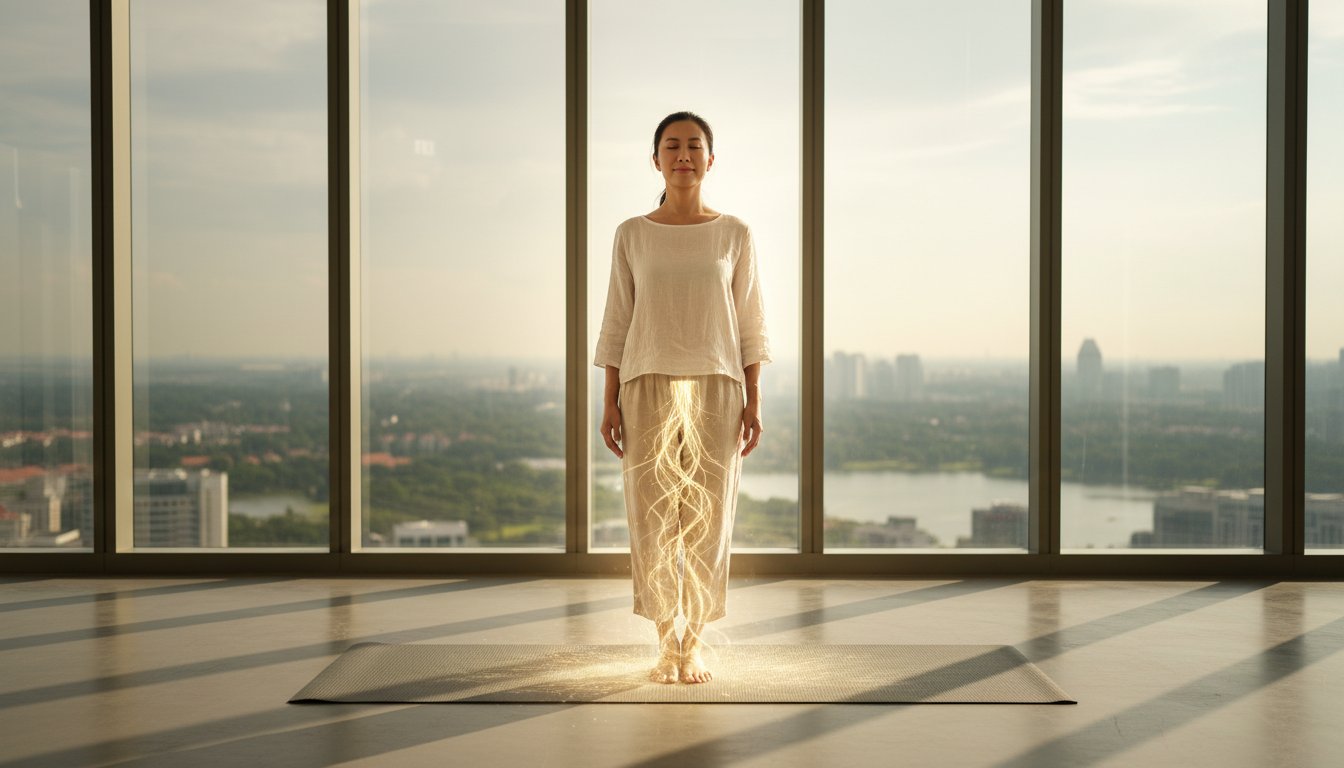
Last Tuesday, a fellow practitioner here in Singapore confessed she felt completely “fried” after a series of intense 60-minute sessions, despite her decade of experience. It’s a story I hear often in our local wellness community. You likely agree that while holding space for others is a privilege, it often leaves us feeling over-activated or physically drained. Integrating TRE into a healing practice shouldn’t feel like another heavy lifting task; it should be the release valve that keeps you and your clients grounded.
In this guide, I’ll show you exactly how to safely and effectively layer Tension & Trauma Releasing Exercises into your current workflow to build a more resilient nervous system. We’re moving away from the fear of over-activation and toward a sustainable, human-first way of working. You’ll get a clear framework for sequencing TRE with other modalities and the confidence to use self-regulation techniques that actually stick.
Key Takeaways
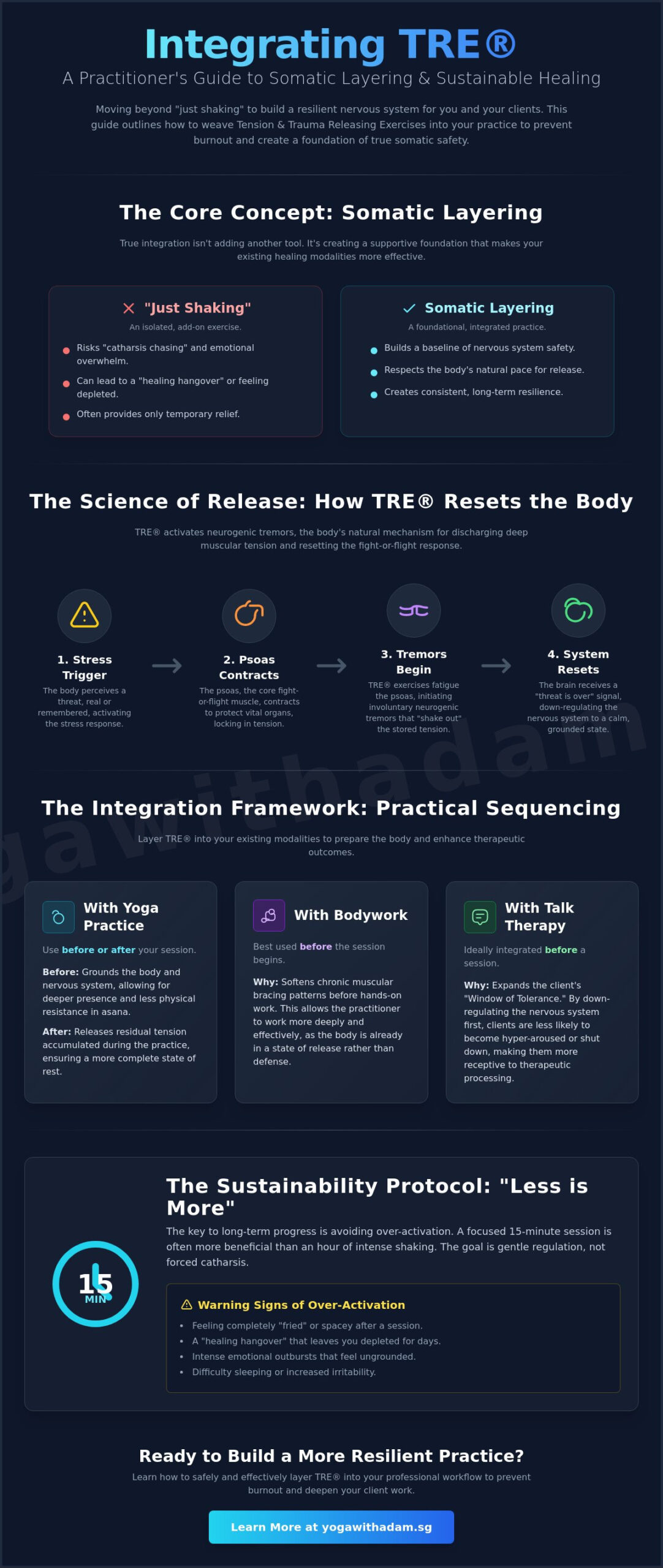
- Learn why true integration is about “somatic layering” rather than just shaking, allowing you to create a supportive foundation that makes your current healing tools even more effective.
- Understand the science of neurogenic tremors and how targeting the psoas muscle allows the body to naturally discharge stress and reset the fight-or-flight response.
- Get practical guidance on integrating TRE into a healing practice by mastering the right sequencing for yoga, bodywork, and traditional therapy sessions.
- Identify the early warning signs of an over-activated nervous system and learn why a 15-minute “less is more” approach is the key to sustainable, long-term progress.
- Discover how to build a grounded, pretension-free somatic routine that fits the real-world needs of modern practitioners and corporate professionals in Singapore.
What Does it Mean to Integrate TRE into a Healing Practice?
When I talk about integrating TRE into a healing practice, I’m not suggesting we just tack a few exercises onto the end of a yoga class or a massage session. It’s about somatic layering. This means we’re weaving the body’s natural release mechanisms into the very fabric of how we hold space for others. For many of us working in Singapore’s high-pressure environment, our clients arrive with elevated levels of physiological stress. Standard tools sometimes aren’t enough because the body stays in a state of high alert. By using TRE as a foundation rather than a standalone trick, we create a baseline of safety that allows other techniques to actually land.
This is the core of the “Yoga for Humans” perspective. It’s about making trauma release accessible and entirely non-performative. We aren’t looking for the “perfect” tremor or a specific aesthetic. We’re looking for a functional reset that fits into a real life. Integrating TRE into a healing practice means moving beyond the act of “shaking” and understanding the physiological shifts happening under the skin. It’s the difference between doing an exercise and facilitating a biological process.
The Role of the Nervous System in Healing
Every healing modality operates within what we call the window of tolerance. If a client is hyper-aroused or completely shut down, they can’t absorb the benefits of a deep tissue massage or a complex yoga sequence. TRE helps expand this window by activating neurogenic tremors. These tremors signal to the brain that the “threat” is over, allowing the muscles to let go of chronic bracing patterns. We move away from the mindset of “fixing” a body that is broken. Instead, we’re supporting the body’s innate wisdom to regulate itself. In my experience, a body that feels supported will always heal more effectively than one that feels forced or poked.
Why Integration Matters for Long-term Sustainability
I’ve noticed a trend in the wellness world toward “catharsis chasing.” This is the idea that a session is only successful if there’s a massive emotional outburst. This often leads to a “healing hangover” where the person feels depleted for days afterward. True integration prevents this. It ensures the nervous system isn’t overwhelmed by the release process. When we focus on sustainability, we build a practice that supports us for a lifetime, not just a single workout. This approach is vital for practitioners too. It helps us avoid the burnout that often comes from over-extending our own energy to “fix” others. We’re building:
- Consistent resilience rather than temporary relief.
- A deeper sense of somatic safety within the practitioner-client relationship.
- A practice that respects the body’s natural pacing and timing.
By prioritizing these elements, the work becomes more effective and much more human. We stop performing and start actually healing.
The Mechanism of Shaking: How TRE Complements Other Modalities
When you first observe a TRE session, the shaking might look unusual. It isn’t a workout or a performance; it’s a biological reset. These neurogenic tremors are the body’s built-in mechanism for discharging high-octane energy left over from stressful events. In our fast-paced Singapore environment, we often carry “invisible” tension in our bodies for years. Integrating TRE into a healing practice helps us access the psoas muscle, which is the primary engine of our fight-or-flight response. When we experience a perceived threat, the psoas contracts to protect our vital organs. If we don’t “shake out” that contraction, the tension stays locked in the tissue.
I’ve found that these tremors act as a bridge between the physical and the psychological. If you dive into the official TRE research, you’ll find that these tremors aren’t just random twitches. They are a precise physiological response designed to down-regulate the nervous system. This makes TRE a perfect partner for breathwork and meditation. While meditation helps quiet the mind, TRE clears the physical “static” that often makes sitting still feel impossible for many students.
TRE and the Vagus Nerve Connection
To understand why shaking works, we have to look at Polyvagal Theory. This theory explains how our nervous system scans for safety or danger. When we shake, we send a clear message to the brain that the “danger” has passed and it’s safe to relax. The vagus nerve is the body’s ‘internal information highway’ for stress regulation. By stimulating this nerve through gentle, involuntary movement, we move out of a state of high alert and back into a state of social engagement and calm. It’s like hitting the refresh button on your internal operating system.
Expanding Interoception Through Somatic Shaking
Interoception is the ability to sense what’s happening inside your body, like your heartbeat or the tension in your jaw. Many of us have learned to ignore these signals until they turn into chronic pain or burnout. Somatic shaking teaches us to “listen” to the body’s subtle cues again. Unlike voluntary exercise where you decide how to move, TRE is about letting the body lead. This shift from external performance to internal feeling is a cornerstone of holistic mental wellness. It builds a sense of safety within oneself, proving that the body knows how to heal if we just get out of its way. If you’re ready to explore this deeper connection, I’d love to see you at Yoga with Adam where we keep things grounded and human.
Practical Sequencing: Combining TRE with Yoga, Bodywork, and Therapy
I often get asked if it’s better to shake at the start or the end of a session. The truth is that there’s no “wrong” way, but there are definitely strategic ways to use these tools. When integrating TRE into a healing practice, I look at the client’s current state. Are they too “up” (anxious, caffeinated, frantic)? Or are they “stuck” (numb, heavy, disconnected)? The sequence we choose depends entirely on what the nervous system needs in that moment.
For those practicing Kundalini Yoga, TRE acts as a vital grounding wire. Kundalini kriyas can generate a lot of internal “electricity” and heat. If that energy doesn’t have a clear path for release, it can leave you feeling ungrounded or even “buzzy” in an uncomfortable way. Shaking after a kriya helps your nervous system process that charge safely. Similarly, in talk therapy, we often find that cognitive insights aren’t enough. You can understand your childhood patterns intellectually, but your psoas might still be stuck in a physical “flight” response. TRE helps the body catch up to the brain, processing those heavy insights through the physical tissue.
The ‘Before’ Protocol: Preparing the System
I often suggest a short TRE session to down-regulate a high-strung client before we begin any deep meditative work. If someone rushes into a session after a stressful day in the Singapore CBD, their nervous system is likely in overdrive. A 10-minute shake helps clear surface-level tension so we don’t spend the first half of the hour just trying to get them to settle. In one private healing session, we used a quick tremor sequence to soften the fascia before starting bodywork. This allowed for much deeper release because the client’s body stopped “guarding” against the touch within the first 5 minutes of the massage.
The ‘After’ Protocol: Grounding the Experience
Using TRE at the end of a session helps you “digest” the emotional or physical work you just did. It’s the difference between hearing a piece of advice and actually feeling it land in your bones. After shaking, the importance of Savasana (corpse pose) cannot be overstated. We usually spend at least 7 to 12 minutes in total stillness. This integration period prevents “spiritual bypassing” by keeping us firmly in our bodies rather than letting us float off into abstract concepts. It ensures that integrating TRE into a healing practice leads to sustainable, real-world changes rather than just a temporary “yoga high.”
The Sustainability Protocol: Avoiding Over-Activation
In our fast-paced Singapore environment, we’re often conditioned to believe that more effort equals better results. We push harder at the gym and stay longer at the office. When integrating TRE into a healing practice, this “more is better” mindset can actually backfire. The goal isn’t to shake as hard or as long as possible; it’s to teach your nervous system that it’s safe to let go. For most of us, 15 minutes of active tremoring is the sweet spot. Going beyond this often leads to over-activation, where the system becomes overwhelmed rather than relieved.
You can spot early signs of over-activation by paying attention to your body’s subtle cues. If you feel a sudden spike in anxiety, a racing heart, or a sense of “flooding” where emotions feel too big to handle, it’s time to pause. Some practitioners also report feeling irritable or having disrupted sleep after a session that went on too long. For those with highly sensitive systems, we often recommend “micro-dosing” the tremors. This might mean shaking for just three to five minutes twice a week to build capacity slowly.
Self-regulation is your most important tool. You are always in control of the process. If the shaking feels like too much, you can stop instantly by straightening your legs and locking your knees, or by rolling onto your side. Pressing your feet firmly into the floor or looking around the room to name three blue objects can help ground you back in the present moment. We prioritize your comfort over any specific physical outcome.
Titration and Pendulation: The Golden Rules
Titration is the process of breaking down a large, overwhelming release into tiny, manageable pieces. It prevents the “all or nothing” healing crisis that leaves people feeling drained for days. Pendulation complements this by moving your attention between a “safe” or neutral spot in your body, like your big toe or your breath, and the “challenging” area where tremors are strongest. This rhythmic shifting builds resilience without flooding the brain. Titration is the art of slowing down to go deeper.
The Role of the Facilitator in Integration
While TRE is designed to be a self-help tool, working with a certified TRE guide for your first few sessions is vital. A guide acts as an external nervous system, helping you stay grounded when things feel intense. They are trained to see the difference between a healthy release and a “freeze” pattern, where the body might look like it’s shaking but is actually stuck in a high-stress state. Once you learn to recognize these patterns yourself, you can transition to a confident and sustainable home practice. This guidance ensures that integrating TRE into a healing practice remains a supportive experience rather than an overwhelming one.
Next Steps: Building Your Integrated Practice with Adam
I believe that healing should feel like coming home, not like another item on an exhausting to-do list. My approach to TRE is intentionally grounded and free from the mystical jargon that often makes somatic work feel out of reach. When we work together, I prioritize your comfort and your actual, lived experience over any “perfect” aesthetic. Integrating TRE into a healing practice is about creating a sustainable relationship with your nervous system that lasts a lifetime.
For those looking to bring these benefits into the professional sphere, I offer a “Human Sustainability” model through my corporate wellness programs in Singapore. These sessions help teams manage the high-pressure environment of our city by teaching practical tools for stress release. Whether we meet in a boardroom or a studio, my goal is to make these techniques feel accessible and effective for everyone.
If you prefer a more personal touch, a 1-on-1 integration session provides a safe space to explore your body’s unique responses. We’ll look at how your history and current lifestyle impact your tremors. You can also join our growing community through regular classes, weekend workshops, or immersive retreats designed to deepen your practice in a supportive environment.
Tailoring TRE to Your Unique Body
Your body has its own history. Maybe you’re managing an old sports injury, or perhaps years of desk work have changed how your spine moves. We adapt every exercise to meet you exactly where you are today. There is no such thing as a “perfect” shake; there is only the movement your body needs to release tension. I encourage a sense of playfulness in our sessions. Healing is deep work, but it doesn’t always have to be heavy. Sometimes, a little humor is the best way to help the nervous system feel safe enough to let go.
How to Get Started Today
You don’t need to wait for a formal session to begin connecting with your body. Try a simple check-in right now. Sit quietly and notice the contact between your feet and the floor. Feel the weight of your body on your chair. This simple act of grounding is the first step in integrating TRE into a healing practice. It builds the self-awareness necessary for deeper somatic work.
- Book a Session: Schedule a 1-on-1 consultation to create a personalized plan.
- Join a Workshop: Check the current calendar for upcoming group sessions in Singapore.
- Stay Consistent: Small, regular releases are more effective than occasional marathons.
You already have the internal mechanism needed to heal and regulate. I’m just here to help you remember how to use it. Whether you’re a fellow practitioner or someone looking for personal relief, I’m ready to support your journey toward a more resilient, vibrantly alive version of yourself.
Take the Next Step Toward a Grounded Practice
Healing doesn’t need to be mystical or overwhelming. It’s really about giving your body the space it needs to process stress naturally. By understanding the biological mechanism of shaking and applying a sustainability protocol, you can avoid the common trap of over-activation. We’ve seen how layering these tremors with yoga or therapy creates a more resilient nervous system that stays steady even when life in Singapore gets hectic. This approach ensures your practice supports your body for a lifetime rather than just providing a temporary fix.
Successfully integrating TRE into a healing practice is a journey I’ve navigated for over 10 years through my own Kundalini and somatic exploration. As a Certified TRE® Provider, my goal is to provide a “Yoga for Humans” experience that feels accessible and effective for your specific needs. I want to help you move past the performative side of wellness and into a routine that prioritizes your long-term well-being and genuine human connection.
If you’re ready to refine your approach and find a rhythm that works for you, book a private TRE integration session with Adam today. You don’t have to figure it all out on your own; we can build a sustainable, supportive path forward together.
Frequently Asked Questions
Is it safe to integrate TRE into my daily yoga routine?
It’s safe to combine TRE with yoga, but I recommend doing it after your asana practice rather than before. Since yoga stretches the psoas muscles that TRE targets, doing 10 to 15 minutes of shaking at the end of your session helps settle the nervous system. In my experience with Singaporean students, starting with just twice a week prevents the body from feeling overwhelmed by the new stimulus.
Can I do TRE if I am already seeing a therapist for trauma?
You can absolutely use TRE alongside traditional therapy. Many practitioners in Singapore find that the physical release of TRE helps process the emotional work done in talk sessions. Just make sure to inform your therapist about your practice. A 2017 study showed that somatic practices can improve therapeutic outcomes by 25 percent when used as a supplementary tool for emotional regulation.
How do I know if I am ‘over-shaking’ during my sessions?
You’re likely over-shaking if you feel dizzy, irritable, or unusually exhausted after a session. I tell my students to follow the “rule of 15,” which means limiting your initial sessions to 15 minutes. If your heart rate stays elevated for more than 5 minutes after you’ve stopped the tremors, you’ve pushed too hard. It’s about finding a sustainable rhythm for your unique body.
Do I need to be a yoga teacher to integrate TRE into my healing work?
You don’t need to be a yoga teacher to begin integrating TRE into a healing practice. This modality is used by physiotherapists, counselors, and bodyworkers across Singapore to help clients manage stress. While a background in anatomy is helpful, the certification process focuses on nervous system regulation. About 40 percent of TRE trainees come from non-yoga backgrounds, including nursing and social work.
What happens if I don’t shake during a TRE session?
It’s completely normal if you don’t shake during your first few tries. About 15 percent of my new students require three or four sessions before their neurogenic tremors kick in. Your body might be holding onto a high level of protective tension that needs time to soften. Focus on the exercises and keep your breath steady; the tremors will show up when your nervous system feels safe.
How long does it take to see the benefits of integrating TRE?
Most practitioners notice a reduction in physical tension or improved sleep quality after 3 to 6 consistent sessions. When integrating TRE into a healing practice, consistency matters more than intensity. In a survey of 100 practitioners, 70 percent reported a noticeable reduction in their daily stress levels within the first month. It’s a marathon, not a sprint, so give your body space to learn this new language.
Can TRE be integrated into corporate wellness settings?
TRE is increasingly used in corporate wellness programs across Singapore to combat burnout and high-pressure work environments. Because it doesn’t require gym gear or a yoga mat, it’s very accessible for office settings. We’ve seen a 30 percent increase in demand for somatic stress relief workshops in the local financial sector since 2022. It’s a practical way to help teams regulate their stress levels during the workday.
Is TRE suitable for people with chronic physical pain?
TRE is often helpful for chronic pain, especially when that pain is linked to stored muscular tension. I’ve worked with students dealing with lower back issues who found relief after 8 weeks of regular practice. However, if you’ve had surgery in the last 6 months, check with your doctor first. We always prioritize your comfort and safety over achieving a specific type of tremor or movement.