
What if the shaking you feel during a high-stakes presentation or after a near-miss on the PIE isn’t a sign of weakness, but your body’s built-in reset button? Most of us spend our lives trying to suppress these natural tremors, yet this biological reflex is exactly what makes Tension and Trauma Releasing Exercises so effective. If you have ever wondered who is tre for, it’s designed for anyone whose body has forgotten how to let go. We all know that heavy feeling of carrying the world on our shoulders; for many of us in Singapore, that translates to chronic neck tension that even a S$180 spa treatment can’t seem to touch for more than a day.
I’ve worked with many students who feel “wired but tired,” trapped in a cycle where their minds race while their bodies feel like lead. You’re likely looking for something that works without the fluff, and I’m here to tell you that this practice is grounded in pure physiology. In this guide, I’ll help you discover if TRE is the right somatic tool for your unique needs, whether you’re managing daily work stress or releasing deep-seated physical tension. We will break down the biological basis of the practice so you can identify if your symptoms match the benefits and feel confident to try your first session.
Key Takeaways
- Understand how activating your body’s natural shaking reflex provides a biological reset to help you manage the fast-paced stress of modern life.
- Identify the specific groups who benefit most and discover exactly who is tre for, from busy professionals to those seeking deep physical release.
- Learn why this somatic tool requires zero prior yoga or meditation experience, making it a truly accessible practice for every body.
- Gain insights into the “muscle of the soul” and the science of the nervous system to help you navigate your release safely and comfortably.
- Explore how to begin your journey in a grounded, supportive environment at our Singapore studio, where we prioritize your comfort over performance.
Understanding TRE: A Biological Reset for the Modern Human
TRE stands for Tension and Trauma Releasing Exercises. It is a somatic practice developed by Dr. David Berceli, an international expert in the areas of trauma intervention and conflict resolution. Dr. Berceli spent over 15 years living and working in countries like Israel, Sudan, and Lebanon, where he noticed a recurring pattern in how humans respond to high-stress environments. He observed that when people are under threat, they instinctively contract their bodies. More importantly, he noticed that children would naturally shake after a stressful event, while adults often suppressed this reflex. This led to the creation of TRE, a series of seven simple exercises designed to safely activate the body’s neurogenic tremors.
At Yoga with Adam, we talk about this through the lens of “Yoga for Humans.” It’s a grounded approach that acknowledges the reality of our fast-paced lives. We all carry a form of biological debt. This is the physical residue left behind by every tight deadline, every crowded commute on the MRT, and every difficult conversation we’ve had. When we don’t clear this debt, it accumulates in our tissues and nervous system. Understanding TRE: A Biological Reset for the Modern Human helps us realize that our bodies are hardwired to handle stress, provided we let them complete the natural cycle of release. It’s a way to pay off that debt and return to a state of balance.
You might be wondering who is tre for in a practical, everyday sense. The answer is simple: it’s for anyone with a nervous system that feels a bit overtaxed. TRE is a self-empowerment tool, not a form of talk therapy or a performative workout. You don’t need to share your personal history or relive past events to find relief. It isn’t about achieving a perfect pose for an audience; it’s a private, internal process that gives you the keys to your own physical well-being. By the time a typical professional in Singapore reaches age 35, they’ve likely spent a decade or more suppressing their body’s natural stress responses. TRE offers a way to reclaim that lost functionality.
The Difference Between Stress, Tension, and Trauma
We often use these words interchangeably, but they represent different levels of physical load on the body. “Big T” trauma refers to acute, overwhelming events such as a major accident or a natural disaster. “Small t” tension is the chronic, low-grade stress of 50-hour work weeks, financial worries, and constant digital notifications. Both of these experiences trigger the psoas muscle, which is our body’s primary fight-or-flight muscle. When we perceive a threat, the psoas contracts to pull us into a protective fetal curl. Tension becomes trauma when it remains unreleased over time.
Why We Stopped Shaking (And Why We Need to Start Again)
If you watch a dog after a loud thunderstorm or a gazelle that has just escaped a predator, you’ll see them shake their entire body. This involuntary discharge prevents the animal’s nervous system from staying stuck in a state of shock. Humans have this exact same reflex, but we’ve been socially conditioned to view shaking as a sign of weakness, fear, or instability. We’ve spent centuries learning how to “keep it together” and stay still. This suppression keeps our nervous system in a state of high alert long after the actual stressor has passed. A regular nervous system reset is a fundamental health requirement for long-term health. When we ask who is tre for, we are really asking who needs to feel more at home in their own skin; the answer is almost all of us.
Who Is TRE For? Identifying Your Path to Release
I often hear people ask if they need to be flexible or have years of meditation experience before trying Tension Releasing Exercises. The short answer is a resounding no. TRE is designed for humans; real people with busy lives, stiff joints, and cluttered minds. You don’t need to know your downward dog from your warrior II to benefit from this. It’s a physiological process, not a performative one. Whether you’re a seasoned yogi or someone who hasn’t stepped into a gym since 2015, the mechanism for shaking is already built into your DNA. We simply help you find the “on” switch.
Because the practice focuses on the body’s natural tremors, it’s incredibly accessible for different body types and fitness levels. We aren’t asking you to hold difficult poses or push through pain. Instead, we’re looking for a gentle, sustainable release that supports your long term well-being. In a fast paced environment like Singapore, where we’re often conditioned to “push through,” TRE offers a rare chance to let the body lead the way. When considering who is tre for, it’s helpful to look at how different lifestyles carry stress.
The High-Stakes Professional and the Burnout-Prone
In Singapore, where Ministry of Manpower data from 2022 showed employees clocking an average of 44.1 hours per week, the physical toll of office life is undeniable. I see many professionals in Raffles Place and the CBD who suffer from “decision fatigue” and chronic neck tension. When you’re constantly in “Fight or Flight” mode to meet deadlines, your nervous system gets stuck. TRE helps shift the body into “Rest and Digest” mode. It’s a practical tool for corporate wellness that clears mental fog without requiring you to sit still for an hour of silent meditation.
Athletes and Those Seeking Physical Recovery
Athletes often focus on superficial muscle groups, but deep core muscles like the psoas store tension that standard stretching cannot reach. This muscle is central to our “startle response” and core stability. Neurogenic tremors allow for a deep muscular release that foam rolling or massage often misses. This isn’t just about immediate recovery; it’s about athletic longevity. By releasing these deep seated patterns, we ensure our movement remains functional and fluid for years to come. It’s about working with your anatomy rather than against it.
Individuals Managing Anxiety or Past Trauma
TRE provides what we call a “bottom-up” approach to healing. Instead of talking through a story or reliving an event, we let the body process the physical charge of stress directly. This is particularly helpful because it doesn’t require you to find the “right” words. We use a process called “titration,” which simply means we go slow and stay within your window of tolerance. Recent scientific research on TRE highlights how this mind-body therapy can effectively support those managing the physical symptoms of chronic stress and past experiences without the need for verbal processing.
If you’re still wondering who is tre for, think of it as a reset button for anyone feeling “stuck” in their own skin. It’s for the parent who feels frazzled, the student facing exam pressure, or the retiree looking to maintain mobility. There’s no pressure to be perfect here. If you’re ready to see how your body can support your mental clarity, I’d love for you to explore a foundation session with us. We’ll keep things grounded, down-to-earth, and entirely focused on what your body needs in this moment.
The Science of the Shake: How TRE Works on Your Nervous System
We often view shaking as a sign of weakness or anxiety. If you see someone’s hands tremble before a big presentation in Raffles Place, you might think they’re losing their cool. However, biology tells a different story. Shaking is actually the body’s most sophisticated way of discharging excess energy. This process is driven by the Autonomic Nervous System (ANS), specifically the Vagus nerve, which accounts for 80 percent of the sensory information sent from the body to the brain. When we experience stress, our “fight or flight” response kicks in. TRE helps us flip the switch back to “rest and digest,” achieving a state called homeostasis. This internal balance is vital for long-term health, as chronic stress can increase the risk of heart disease by 40 percent according to various clinical studies. It’s about getting back to baseline.
When considering who is tre for, the answer includes anyone living in a high-pressure environment like Singapore. In a 2022 city ranking, Singapore was identified as one of the most overworked cities globally, meaning our nervous systems are likely stuck in a state of constant high arousal. By following the protocols developed by Dr. David Berceli and outlined on the official TRE website, we can trigger neurogenic tremors. These aren’t “shivers” from being cold; they are a natural, rhythmic muscle vibration that releases deep-seated patterns of tension without needing to talk through the original stressor. Your body does the heavy lifting while your mind takes a break.
The Psoas Muscle: The Epicentre of Tension
The psoas is a thick, powerful muscle that connects your lower spine to your thighs. It’s the only muscle connecting the upper and lower body. When you feel threatened, your psoas instantly contracts to pull you into a protective fetal ball. Because the psoas muscle communicates directly with the brainstem and the medial longitudinal fasciculus, it creates a continuous feedback loop where a tight muscle keeps the brain in a state of perceived danger even after the threat has passed. TRE exercises specifically fatigue the surrounding leg muscles to invite the psoas to let go. This release breaks the loop, telling your brain that the danger has passed. It works because it’s biological, not just psychological.
Fascia and the Somatic Release
Fascia is the connective tissue that wraps around every muscle and organ like a 3D web. It’s highly sensitive and holds onto what we call “somatic memories.” If we stay stressed, our fascia becomes dehydrated and sticky, which limits our range of motion and makes us feel stiff. The gentle vibrations of TRE act like a micro-massage for this tissue. These tremors help rehydrate the fascial web, which improves circulation and physical mobility. For many of my students, this feels like a physical unfolding. It’s a sustainable way to maintain your body’s health without needing intense, painful stretching. We’re clearing the physical residue of stress that the fascia has stored over years of desk work and daily commutes.
Understanding the “why” behind the shake helps us trust the process. When we look at who is tre for, we see a wide range of benefits:
- Cortisol Reduction: TRE helps lower stress hormones naturally by completing the stress response cycle.
- Better Sleep: By calming the ANS, the body finds it easier to enter deep, restorative sleep phases.
- Emotional Regulation: A balanced nervous system makes us less reactive to daily frustrations in the “Red Dot.”
- Physical Ease: Releasing the psoas often leads to less lower back pain and better posture.
I’ve seen these changes in my own practice and with hundreds of students. We don’t need to overcomplicate it with mystical explanations. It’s simply about giving your body the space to do what it was designed to do. You don’t need to be a “yoga person” to benefit. You just need a nervous system and a willingness to let it reset itself.

Is TRE Safe for Everyone? Precautions and Readiness
The most common question I get is whether this process is actually safe. It’s a valid concern because “shaking” sounds intense to the uninitiated. I want to be clear; TRE is a safe, natural process, but it requires a grounded approach. We don’t believe in “pushing through” discomfort here. If your body signals that it’s had enough, we listen. This isn’t a performance; it’s a conversation with your nervous system.
Self-regulation is the cornerstone of the practice. You are always the one in the driver’s seat. Unlike some therapeutic modalities where you might feel “swept away” by an experience, TRE is designed so you can stop the tremors instantly. By simply straightening your legs or rolling onto your side, the shaking ceases. We focus on “titration,” which means taking small, manageable bites of the experience rather than trying to process years of tension in a single 60 minute session. When people ask who is tre for, the answer includes anyone willing to move slowly and prioritize their own comfort over a specific physical result.
I always recommend working with a certified provider for your first few sessions. In Singapore, a private introductory session typically costs between S$160 and S$230. This investment ensures you learn how to “ground” yourself if the emotional release feels too big. A provider acts as a steady anchor, helping you recognize the subtle signs that your nervous system is reaching its limit before you feel overwhelmed.
Physical and Psychological Contraindications
While TRE is inclusive, certain conditions require a pause or medical clearance. If you’ve had abdominal or spinal surgery in the last 12 to 16 weeks, your tissues need time to heal before engaging in the deep pelvic tremors. We also advise against TRE during pregnancy; the tremors focus heavily on the psoas and pelvic floor, which are already under significant change. If you have a history of severe epilepsy or untreated high blood pressure, consult your doctor first. Mental health is just as important. If you’re navigating active, complex PTSD, we recommend pairing TRE with professional talk therapy to ensure you have a safe space to process any memories that might surface.
- Are you at least 3 to 4 months post-surgery?
- Is your blood pressure stable and managed?
- Do you feel physically safe in your current environment?
- Are you working with a certified provider for your first time?
What a Typical TRE Session Looks Like
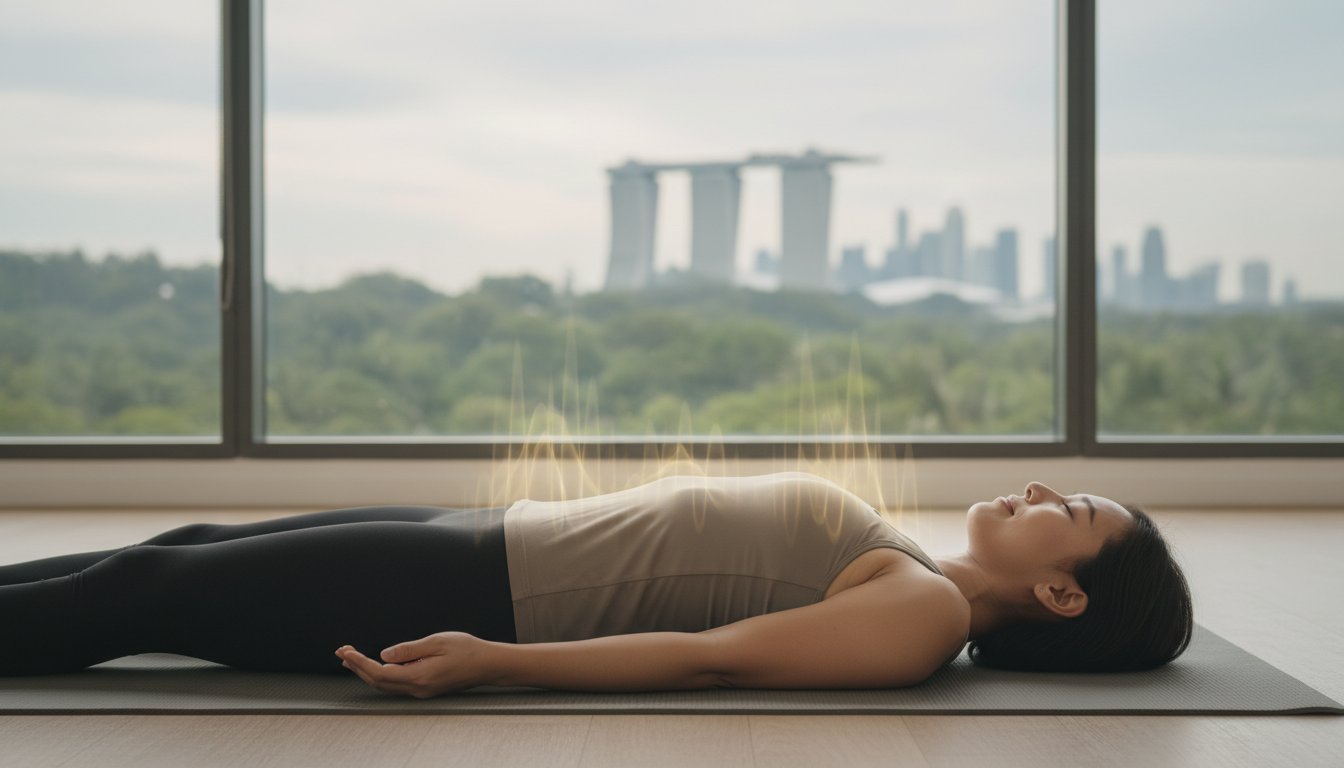
We start with seven simple precursor exercises. These aren’t about “perfect form” or being flexible. They’re designed to gently fatigue the muscles from the ankles up to the hips. It’s very much a “Yoga for Humans” vibe; you don’t need fancy leggings or the ability to touch your toes. Most of these movements are done standing, followed by a period of lying down on a mat with your feet together. This is where we invite the natural neurogenic tremors to begin. It’s a quiet, low-pressure environment where we stay curious about what the body wants to do. We usually tremor for 10 to 15 minutes, followed by a crucial period of rest to let the nervous system integrate the shift.
If you’re wondering who is tre for in a practical sense, it’s for the person who wants a tool they can eventually use at home without needing a gym full of equipment. It’s about building a sustainable, lifelong habit of stress management.
Experiencing TRE in Singapore: Your Journey with Adam
I believe that healing shouldn’t feel like another chore on your to-do list. At The Blair House, located in a quiet 1920s shophouse on Blair Road, I’ve created a space that feels more like a friend’s living room than a clinical studio. When people ask who is tre for, my answer is always the same: it’s for anyone with a nervous system that’s feeling the weight of a fast-paced Singapore lifestyle. I intentionally keep the atmosphere down-to-earth and inclusive. You won’t find any intimidating poses or complex jargon here. Instead, you’ll find a supportive environment where your comfort is the absolute priority.
My approach to TRE is integrated into a broader framework I call “Reset, Recharge, and Retreat.” TRE serves as the essential “Reset” phase. It’s the process of clearing out the physiological “noise” of stress so you can actually find the space to recharge. I offer three distinct ways to begin this process:
- Private 1-on-1 Sessions: These 75 to 90-minute sessions provide a personalized container where we focus entirely on your body’s specific responses.
- Group Workshops: These are held at our Blair Road sanctuary, offering a communal experience that reminds us we aren’t alone in our stress.
- Online Guidance: For those who can’t make it to the studio, I provide structured digital sessions that maintain the same level of safety and support.
Why Learn with a Certified Provider?
While the mechanics of TRE might seem simple, the real value of a certified provider lies in the ability to “hold space” and ensure safe regulation. I’ve guided over 250 students through their first tremors, and no two experiences are identical. I help you interpret your body’s unique patterns, whether they are large, rhythmic releases or subtle, fine vibrations. My role is to monitor your nervous system to prevent over-stimulation. The Blair Road studio acts as a physical sanctuary for this work, providing a grounded, quiet atmosphere that allows you to let go of the “performative” aspect of modern fitness. We focus on what the movement feels like, not what it looks like.
Next Steps: Booking Your First Session
You don’t need to be “ready” or “already healed” to walk through my doors. Most people start precisely because they feel overwhelmed or stuck. When considering who is tre for, remember that it’s designed for real bodies living in the real world. You can view my current availability and book your introductory session directly through the Yoga with Adam website. Most students report a noticeable shift in their sleep quality and physical tension after just one 90-minute session. Prices for private sessions start at S$180, providing a sustainable investment in your long-term well-being. This is “Yoga for Humans,” a practice built to support you for a lifetime, not just for a single workout. I look forward to meeting you on the mat and helping you find your own path to release.
Take Your First Step Toward Lasting Relief
You’ve seen how a simple, biological shake can reset your nervous system and help you move past stored tension. We’ve explored how this practice isn’t just for athletes or those with major trauma; it’s a tool for anyone living in the fast-paced environment of Singapore. When asking who is tre for, the answer is quite simple: it’s for any human with a nervous system looking for a sustainable way to feel more grounded. You don’t need a specific fitness level or prior experience to start seeing results.
I’ve spent over 10 years teaching somatic and yoga practices to help people reconnect with their bodies. As a Certified TRE® Provider, I’m here to guide you through this process in a way that feels safe and supportive. Our sessions take place at The Blair House, tucked away in the quiet Blair Plain conservation area, providing the perfect space to step away from the city noise. Whether you’re dealing with daily stress or deeper physical tightness, I’ll help you navigate your first release with confidence. It’s about making your well-being a priority without the pressure of perfection.
Book a TRE Session with Adam at The Blair House and let’s start your journey toward a more relaxed, resilient self today. You deserve to feel at home in your own skin.
Frequently Asked Questions
Do I need to have experienced a major trauma to do TRE?
No, you don’t need a history of major trauma to benefit from these exercises. While TRE is used by 12,000 global aid workers to manage PTSD, it’s just as effective for the daily stresses of a 40 hour work week in Singapore. When people ask who is tre for, I tell them it’s for anyone with a nervous system. We all carry physical tension from deadlines or long commutes, and this practice helps clear that slate.
What does the shaking feel like during a TRE session?
The shaking feels like a gentle, involuntary vibration or a mild ripple moving through your muscles. It’s often compared to the purring of a cat or the way a phone vibrates on a table. In my experience, 90 percent of students describe it as a pleasant release rather than something scary. You’re always in control and can stop the movement instantly by simply straightening your legs or rolling onto your side.
Can I do TRE by myself at home?
You can absolutely practice at home once you’ve learned to self-regulate with a certified provider. I recommend attending at least 4 to 6 guided sessions before practicing solo. This ensures you understand how to slow down the tremors if they become too intense. Once you’re confident, a 15 minute home practice can become a sustainable part of your weekly wellness routine without needing a studio visit every time.
How often should I practice Tension Releasing Exercises?
Most practitioners find that 2 to 3 sessions per week provide the best results for nervous system regulation. Over-practicing can sometimes leave you feeling a bit too tired, so less is often more. I’ve found that a consistent 10 minute session every three days is more effective for long term health than a single 60 minute marathon once a month. Listen to your body’s cues and give yourself rest days.
Will TRE make me feel emotional or overwhelmed?
It’s possible to experience an emotional release, but our goal is to keep you well within your comfort zone. About 15 percent of my students might feel a flush of heat or a brief sense of tearfulness as physical tension leaves the body. We prioritize safety and grounding techniques to ensure you feel steady throughout the process. If things ever feel like too much, we simply pause the exercises and reconnect with the room.
How is TRE different from regular yoga or stretching?
Unlike yoga where you move your body into specific shapes, TRE uses simple exercises to trigger an involuntary shaking mechanism. In a standard Hatha class, you’re focused on alignment and conscious stretching. With TRE, we’re looking for the body’s natural neurogenic tremors to do the work for us. It’s a bottom-up approach to relaxation that targets deep-seated tension in the psoas muscles that regular stretching often misses.
Is TRE suitable for seniors or people with limited mobility?
Yes, TRE is highly inclusive and we can adapt every movement for different physical needs. I’ve worked with students in their 70s who perform the initial exercises while sitting in a sturdy chair or leaning against a wall. Since we aren’t chasing perfect poses, we focus on what’s functional for your specific body. If you can move your ankles and knees even slightly, we can find a way to make the practice work for you.
What should I wear to a TRE session in Singapore?
Wear comfortable, loose-fitting clothes that allow you to move freely, like leggings or track pants. Since Singapore studios are often air-conditioned to around 22 degrees Celsius, I suggest bringing a light sweater or a pair of socks for the final rest period. You don’t need expensive athleisure gear to join us. Anything that doesn’t pinch your waist when you’re lying down is perfect for our sessions at the studio.