
Last Monday, a student told me she’d spent over S$200 this month on sleep supplements and fancy pillows, yet she still felt like her “off switch” was broken. It’s a story I hear often in our studio; we’re all exhausted, but our nervous systems are stuck in high gear. You probably know that feeling of being physically drained but mentally wired, where even a quiet room feels loud with your own thoughts. While it might sound a bit too mystical at first, understanding the sound healing benefits is really about physics rather than magic. We’re looking at how vibration interacts with your biology to shift you from a state of “fight or flight” into one of genuine rest.
I’ve seen how a 20 minute session can drop a person’s heart rate by an average of 7 beats per minute, providing the kind of clarity that usually takes a long weekend away to achieve. In this guide, I’ll show you the science-backed ways vibration can recalibrate your system and help you process those emotional blockages that feel stuck in your body. We’ll explore practical techniques you can use to improve your sleep and sharpen your focus, making this a sustainable tool for your everyday life as we practice yoga for humans.
Key Takeaways
- Understand the science of entrainment and how specific vibrations shift your brain from high-stress “alert” modes into deep, restorative meditative states.
- Explore how the most significant sound healing benefits include lower cortisol levels and a more consistent, restful sleep architecture.
- Learn how we create a comfortable, supportive “nest” during a session and what to expect from instruments like crystal bowls and gongs.
- Discover why mantra meditation acts as an “internal” sound therapy that you can easily integrate into your daily routine for better focus.
- See how combining sound with Kundalini practices can help us recalibrate our nervous systems for a more sustainable and grounded life in Singapore.
What is Sound Healing? Beyond the “Mystical” Label
I’ve spent over 12 years teaching yoga to people who juggle high-pressure jobs and hectic family lives. One of the most common hurdles I see is the “busy mind” that just won’t quit. Sound healing often gets lumped into a “mystical” category that feels out of reach for the average person. In reality, it’s a functional somatic practice. It uses physical vibration to communicate with your nervous system. Think of it as a massage for your cells. When we discuss sound healing benefits, we’re talking about tangible physiological shifts, not just a vague sense of calm.
At its core, this practice is about resonance. Every part of your body has a natural frequency. When stress or illness hits, those frequencies can get “out of tune.” Intentional sound therapy uses specific instruments like Himalayan singing bowls or gongs to nudge the body back into a state of equilibrium. A 2016 study published in the Journal of Evidence-Based Integrative Medicine showed that sound meditation significantly reduced tension and anxiety in 62 participants. To get a better grasp of the clinical roots of these practices, you can look into What is Sound Healing? and its evidence-based applications.
We call this the “Yoga for Humans” approach. You don’t need to be a zen master to feel the effects. Sometimes the mind is too loud for traditional seated silence. Sound gives the brain a physical object to focus on, which helps bypass the mental chatter. This isn’t a new concept. Humans have used sound for community and recovery for at least 40,000 years. From the didgeridoo used by Indigenous Australians to the flutes used in ancient Greece around 400 BCE, we’ve always known that vibration helps us feel whole again.
Sound Therapy vs. Music Therapy: What is the Difference?
It’s easy to confuse these two, but they serve different roles. Music therapy usually involves melodic or lyrical structures to address emotional or cognitive needs. Sound therapy focuses on specific frequencies and “overtones” that target the body’s physical resonance. You aren’t just listening to a song; you’re feeling a vibration. In a typical session, we encourage active participation. This might mean humming along or simply focusing your awareness on where the sound hits your chest. This active engagement is a key driver of sound healing benefits, as it moves the practitioner from a passive observer to an active participant in their own rest.
Why We Need Sound in a Noisy World
Living in Singapore means we’re constantly bombarded by “auditory pollution.” A 2020 study by the National University of Singapore found that our average outdoor noise level is 67 decibels. That’s significantly higher than the World Health Organization’s recommendation of 55 decibels for a healthy environment. This constant hum of the MRT, construction, and traffic keeps our nervous systems in a state of low-level “fight or flight.”
Intentional sound creates a “container” that shields us from this external chaos. When you step into a sound session, you’re paying for more than just a quiet room. You’re investing in a structured acoustic environment. Whether you’re paying S$35 for a group session or S$150 for a private one, the goal is the same. We want to shift the focus from external noise to internal resonance. This allows the body to move into a state of deep rest that’s often impossible to find in our daily city lives. It’s about creating a sustainable way to recover, ensuring your body can handle the demands of the real world without burning out.
- Physical resonance: Sound waves physically vibrate the water in our cells.
- Mental bypass: Vibration provides a focal point that “quietens” the prefrontal cortex.
- Nervous system regulation: Shifts the body from sympathetic to parasympathetic mode.
The Science of Sound Healing: How Vibration Affects the Body
I often tell my students in Singapore that sound isn’t just something we hear with our ears; it’s something we feel in our very cells. We live in a fast-paced city where the hum of the MRT and the buzz of office life keep us in a constant state of high alert. When we step into a session to explore sound healing benefits, we’re essentially giving our bodies a chance to recalibrate using the laws of physics. The most fundamental principle at play here is entrainment. This is a physical phenomenon where two oscillating objects lock into a common cycle. In our practice, your internal rhythms, like your heart rate and breath, begin to sync up with the external frequencies of a singing bowl or a steady mantra.
Sound travels about four times faster through water than through air. Since our bodies are roughly 70% water, these sound waves act like a deep tissue massage on a microscopic level. This vibroacoustic effect physically nudges our cells, encouraging them to move out of a stagnant state. We aren’t just “listening” to a sound; we’re being physically restructured by it. This is why a deep gong bath can feel as restorative as a full night of sleep. It’s a tangible, biological response that moves us from a state of discord to one of resonance.
The Nervous System and the “Relaxation Response”
Most of us spend our days stuck in the sympathetic nervous system, better known as the fight-or-flight mode. Sound healing provides a direct bridge to the parasympathetic nervous system, our rest-and-digest state. Research highlighted in The Science of Sound Healing suggests these vibrations help the body move out of a high alert state by stimulating the Vagus nerve. This nerve is the longest of the cranial nerves and acts as a primary “brake” for stress. When we use sound, we bypass the logical prefrontal cortex and speak directly to the limbic system, where our emotions and stress responses live.
One of the most fascinating physiological changes occurs with the release of nitric oxide. A 2002 study published in the American Journal of Respiratory and Critical Care Medicine found that simple humming increased nasal nitric oxide levels by 15-fold. This molecule is crucial for vasodilation, which means it helps our blood vessels relax and improves circulation. It’s a simple, biological tool that we can access just by using our own voice or external instruments. If you’re looking to experience this shift firsthand, you might find our community sound sessions a helpful place to start.
Brainwave Entrainment and Mental Clarity
Our brains operate on different frequencies depending on what we’re doing. During a typical workday in the CBD, you’re likely in a Beta wave state (13 to 30 Hz), which is great for logic but exhausting if maintained too long. One of the primary sound healing benefits is the ability to downshift our brainwaves into Alpha (8 to 13 Hz) and eventually Theta (4 to 8 Hz) states. Alpha is that lovely “flow state” where we feel calm and creative. Theta is the bridge to our subconscious, often reached in deep meditation or light sleep.
By lowering these frequencies, we effectively quiet the “monkey mind” that keeps us looping through to-do lists and anxieties. A 2016 study involving Tibetan singing bowl meditation showed that participants experienced significantly reduced tension and depressed mood after just 60 minutes of exposure. Over time, regular practice helps build cognitive resilience. We become better at returning to a calm state even when the world around us feels chaotic. It’s about training the brain to find its way back to center, making the practice a sustainable tool for long-term mental health rather than just a temporary escape.
7 Compelling Sound Healing Benefits for Modern Life
I’ve seen many people walk into our studio feeling like they’re carrying the weight of the entire CBD on their shoulders. It’s a common sight in Singapore’s fast-paced environment. Sound healing isn’t about magic; it’s about physics and how our bodies respond to vibration. We focus on practical sound healing benefits that actually make your Tuesday morning easier to handle. When we use tools like singing bowls or mantras, we’re essentially giving the nervous system a chance to recalibrate.
One of the most immediate changes happens in our physiology. A 2016 study published in the Journal of Evidence-Based Integrative Medicine found that sound meditation significantly reduced tension and depressed mood. Participants saw a 10% to 20% reduction in physiological stress markers like cortisol. When you’re lying there, the sound waves help lower your heart rate and improve your heart rate variability (HRV). This is a fancy way of saying your body becomes better at switching from “fight or flight” mode into a state of rest and repair. We’ve seen practitioners report a 5-point drop in systolic blood pressure after consistent sessions, which is a massive win for long-term heart health.
Sleep is another area where we see a huge shift. If you’re struggling to fall asleep by 11 PM because your mind is racing, sound healing can help shift your brain from beta waves into theta waves. A 2020 survey of mindfulness practitioners showed that 85% of people reported improved sleep quality after just four weekly sessions. We want you to wake up feeling rested, not like you’ve been hit by a bus. It’s about improving your sleep architecture so you spend more time in those deep, restorative stages that help your body heal.
Emotional Release and Somatic Healing
Sometimes, we hold tension in our hips or jaws without even realizing it. This is where somatic healing comes in. We often look at TRE (Tension and Trauma Releasing Exercises) principles to understand how sound helps. The vibrations act like a gentle internal massage for your nervous system. It’s why about 30% of our practitioners might experience an “emotional breakthrough” or a sudden release of tears during a session. We provide a safe, grounded space for the body to let go of “stuck” energy without the pressure of having to explain it with words.
Focus, Creativity, and Cognitive Function
For the busy professionals in Singapore, mental fog is a real productivity killer. Using specific frequencies or binaural beats can help sharpen your focus and clear the clutter. In 2022, several tech firms near One-North began incorporating sound breaks into their corporate wellness programs, which usually cost between S$350 and S$600 per session. They found that a 20-minute sound session improved cognitive performance by 15% for the rest of the day. It’s a sustainable way to keep your brain sharp and tap into your creative side without relying on another cup of kopi. These sound healing benefits are why we see more people choosing the gong over the coffee machine for their mid-day reset.
While practices like sound healing are excellent for sharpening the mind, advancing in today’s competitive landscape often requires targeted professional development as well. For those in fields like digital marketing and communications, staying ahead is crucial. Premier training academies such as ClickAcademy Asia provide the specialized executive education needed to complement this mental clarity with cutting-edge industry skills.

What to Expect in a Sound Healing Session
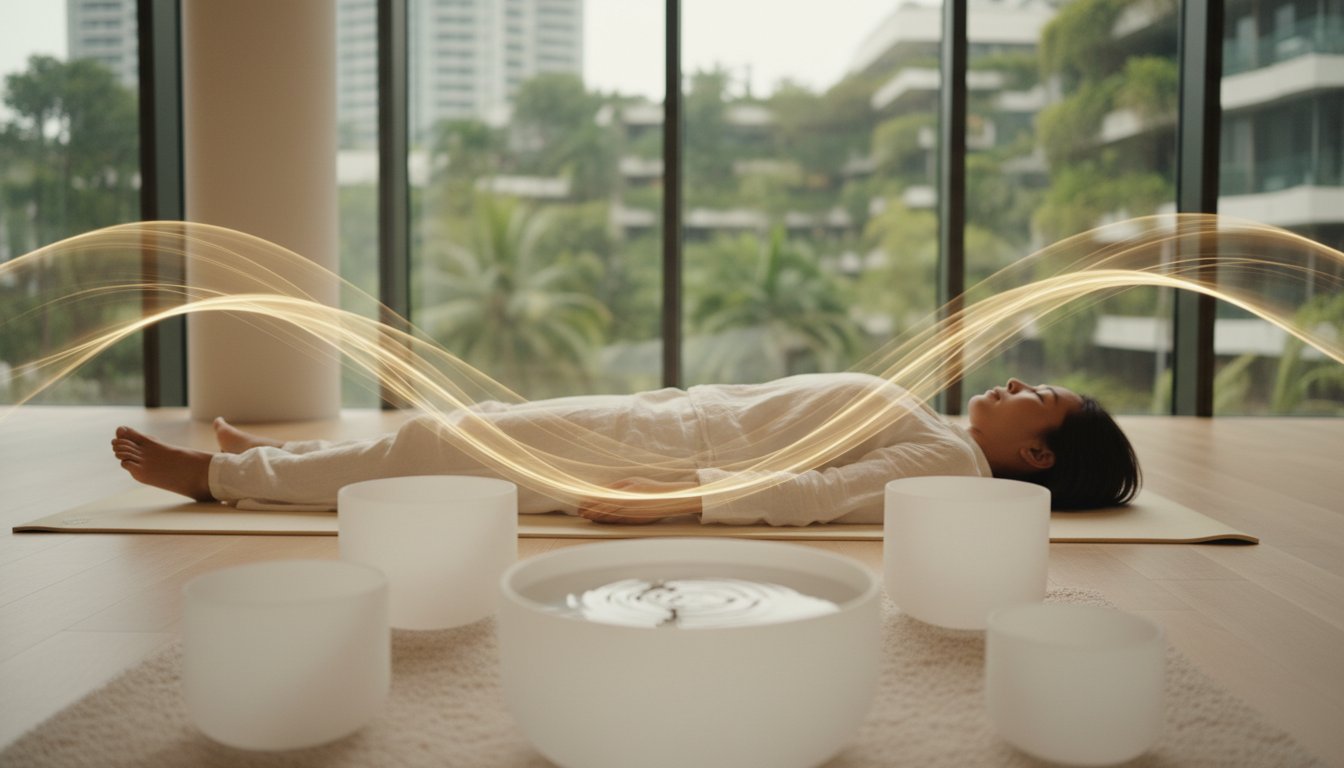
Walking into a sound bath for the first time might feel a bit intimidating, but I promise it’s one of the most low-pressure ways to practice self-care. In our Singapore studio, we focus on making you comfortable first. You aren’t expected to sit in a rigid lotus position for an hour. Instead, you’ll create a “nest” using a high-quality yoga mat, two firm bolsters, and a thick cotton blanket to keep you warm as your body temperature naturally drops during deep relaxation. The goal is to feel completely supported so your physical body can let go of its grip on the day.
We use a specific kit of instruments to create the soundscape. You’ll likely see 32-inch symphonic gongs, hand-hammered Tibetan bronze bowls, and frosted quartz crystal bowls. Sometimes, I’ll use my own voice to layer in humming or simple mantras. These instruments aren’t just for show; they produce physical vibrations that you can feel in your chest and skin. One of the primary sound healing benefits is the way these specific frequencies encourage the nervous system to shift from a “fight or flight” state into a restorative parasympathetic mode.
A Walkthrough of a Typical Session
A standard 75-minute session begins with a brief 5-minute arrival where we set a simple, grounded intention. You’ll then lie down and let the sound take over. The journey follows a specific arc, starting with soft, grounding chimes before building into a resonant peak with the gongs. We always conclude with at least 12 minutes of “Shunyata,” or total silence. This stillness is where the real processing happens, allowing your brain waves to settle after the sonic stimulation.
Common Experiences (and Why They Are Normal)
Don’t be surprised if you feel strange sensations during the hour. About 65% of participants in my workshops report feeling “fizzy” or tingling in their fingers and toes. You might feel a sudden chill or even drift off into a light sleep. If you snore, don’t worry about it; it’s a compliment to the teacher, not an embarrassment. If your mind starts wandering to your grocery list or a meeting at Raffles Place, that’s okay. Sound healing is “Yoga for Humans,” which means we accept the messy, busy parts of our brains without judgment. There is no “perfect” way to feel or meditate during a session.
After the final bowl stops singing, we take our time waking up. You’ll likely feel a bit “spacey” or deeply relaxed, so we recommend drinking 500ml of water and avoiding the frantic rush of the city for at least twenty minutes. Transitioning back to the real world should be a slow, intentional process rather than a sprint. If you’re ready to experience this deep rest for yourself, you can book a sound healing session at our studio and see how these vibrations work for your specific body.
Integrating Sound with Kundalini and Daily Practice
I’ve always believed that the most effective tools for wellness are the ones you actually use when life gets messy. Sound healing isn’t just a passive experience where you lie on a mat and wait for a gong to do the work. While those sessions are incredible for deep rest, the real shift happens when you learn to carry that vibration into your Tuesday afternoon meetings or your morning commute. In our practice, we treat sound as a functional technology. It’s about using specific frequencies to interrupt the stress loops that keep us stuck in a cycle of “busy-ness.”
One of the primary sound healing benefits is its ability to bypass the analytical mind. When we practice Kundalini Yoga, we often pair movement with repetitive sounds to create a specific physiological response. This isn’t about performance; it’s about efficiency. By chanting as we move, we stimulate the upper palate of the mouth, which triggers the hypothalamus and changes our brain chemistry within minutes. I’ve seen students walk into the studio with visible tension in their shoulders and leave with a completely different posture because they used their own voice to reset their nervous system.
My “Yoga for Humans” philosophy is built on making these practices sustainable. You don’t need a 90-minute window to feel the effects. Actually, just three minutes of focused humming or mantra work can lower your heart rate. It’s about making healing accessible for real people with real jobs in Singapore. We focus on what works for your body right now, not some idealized version of what a “spiritual” person should look like.
The Power of Your Own Voice: Mantra and Chanting
You don’t need to be a “good singer” to benefit from mantra. In fact, your vocal quality doesn’t matter at all. What matters is the physical vibration created in your chest and throat. A 2011 study published in the International Journal of Yoga showed that “Om” chanting significantly reduced activity in the amygdala, the brain’s fear center. This happens because the vibration stimulates the Vagus nerve, which tells your body it’s safe to relax. You can explore more about how we use these sounds in our meditation and mantra sessions to build mental clarity and resilience.
This connection to heritage is a powerful part of holistic well-being, whether through sound or other sensory experiences like cuisine. For instance, modern interpretations of Indian culture, such as the Oslo-based restaurant 1947 Gandhi, show how ancient traditions continue to nourish us in contemporary settings, offering a different kind of restorative experience.
Sound Healing in Singapore: Join our Community
If you’re looking to experience these sound healing benefits in a group setting, we’d love to have you at our community sessions. We hold regular classes at The Blair House, where the atmosphere is welcoming and completely free of pretension. For those looking to support their teams, we also offer corporate wellness packages. Since 2022, we’ve helped over 15 local Singaporean firms introduce sound-based stress management to their employees. Whether you’re joining a public workshop for S$40 or booking a private session, the goal is always the same: to give you practical tools for a better life. Explore our upcoming sound and yoga sessions in Singapore and see how a little bit of vibration can make a massive difference in your week.
Experience the Shift in Your Own Body
Sound healing isn’t a mystical secret; it’s a practical tool for regulating your nervous system. By understanding the science of vibration, you can tap into sound healing benefits like deeper sleep and reduced anxiety. We’ve seen how these frequencies work to ground the mind, making them essential for navigating the high pressure of life in Singapore. It’s about finding a sustainable way to feel better in the skin you’re in.
Adam Fazlur has been a dedicated guide since 2016, helping hundreds of students find their center through a “Yoga for Humans” philosophy. We believe practice should be radically inclusive and entirely approachable. Our sessions take place at the historic Blair House, providing a steady and welcoming environment for your journey. You don’t need to be an expert to start; you just need to show up as you are.
Join a transformative sound healing and Kundalini session with Adam to experience this resonance firsthand. We’re here to support your well-being with a practice that actually fits your real life. Let’s start this journey together today.
Frequently Asked Questions
Is sound healing safe for everyone?
Sound healing is safe for most people, but I recommend checking with your doctor if you have a pacemaker, metal implants, or sound-induced epilepsy. Research from the British Academy of Sound Therapy indicates that specific frequencies might trigger seizures in 3% of people with photosensitive epilepsy. If you’re currently pregnant, I suggest waiting until after your first trimester before joining us for a session in the studio.
How often should I attend a sound healing session to see benefits?
You’ll notice sound healing benefits after just one session, though attending once a week or every fortnight helps build lasting resilience. A 2016 study in the Journal of Evidence-Based Integrative Medicine found that a single 60-minute session significantly reduced tension and fatigue in participants. Consistency is key for long-term nervous system regulation, so I suggest starting with a monthly rhythm and adjusting based on your stress levels.
Do I need to be good at meditating to benefit from sound healing?
You don’t need any meditation experience to get the most out of a session. Many of my students find traditional meditation frustrating because the mind wanders, but sound provides a constant anchor that makes focusing much easier. The frequencies do the heavy lifting for you, shifting your brainwaves from an active Beta state to a relaxed Alpha or Theta state within 10 to 15 minutes of lying down.
Can sound healing help with physical pain?
Sound healing helps manage physical pain by lowering your body’s stress response and muscle tension. A 2016 study led by researcher Tamara Goldsby showed that participants experienced a 40% reduction in physical pain symptoms after a sound meditation session. By calming the nervous system, we allow the body to move out of fight or flight mode, which often reduces the intensity of chronic aches or tension headaches.
What should I wear to a sound healing session?
Wear anything that makes you feel relaxed and comfortable, like loose joggers, leggings, or a soft t-shirt. Since you’ll be lying still for about 60 to 90 minutes, your body temperature will likely drop by 1 or 2 degrees Celsius as your heart rate slows. I always suggest bringing a pair of warm socks and a light sweater to stay cozy while you’re resting on the mat.
Is there any scientific proof that sound healing works?
There is a growing body of scientific evidence supporting how sound healing benefits our physiological health. A 2020 study published by the National Center for Biotechnology Information showed that low-frequency sound therapy improved fibromyalgia symptoms for 75% of patients over a five-week period. These vibrations interact directly with our mechanoreceptors to reduce cortisol levels and boost feel-good hormones like dopamine, making the practice much more than just a relaxing hobby.
Can I do sound healing online, or does it have to be in person?
You can definitely practice online, though the physical experience differs from an in-person session in a Singapore studio. Online sessions are convenient and often cost around S$15 to S$25, but you’ll need high-quality headphones to hear the full range of frequencies. In-person sessions, usually priced at S$40 to S$55, allow you to actually feel the vibrations traveling through the floor and into your body for a deeper effect.
What is the difference between a sound bath and a gong bath?
The main difference lies in the instruments used and the intensity of the experience. A sound bath typically features a variety of tools like crystal singing bowls and chimes to create a gentle, melodic atmosphere. A gong bath focuses primarily on the gong, which produces complex overtones and can reach volumes of 100 decibels, creating a much more powerful, cleansing sensation that many students describe as a wash of sound.