

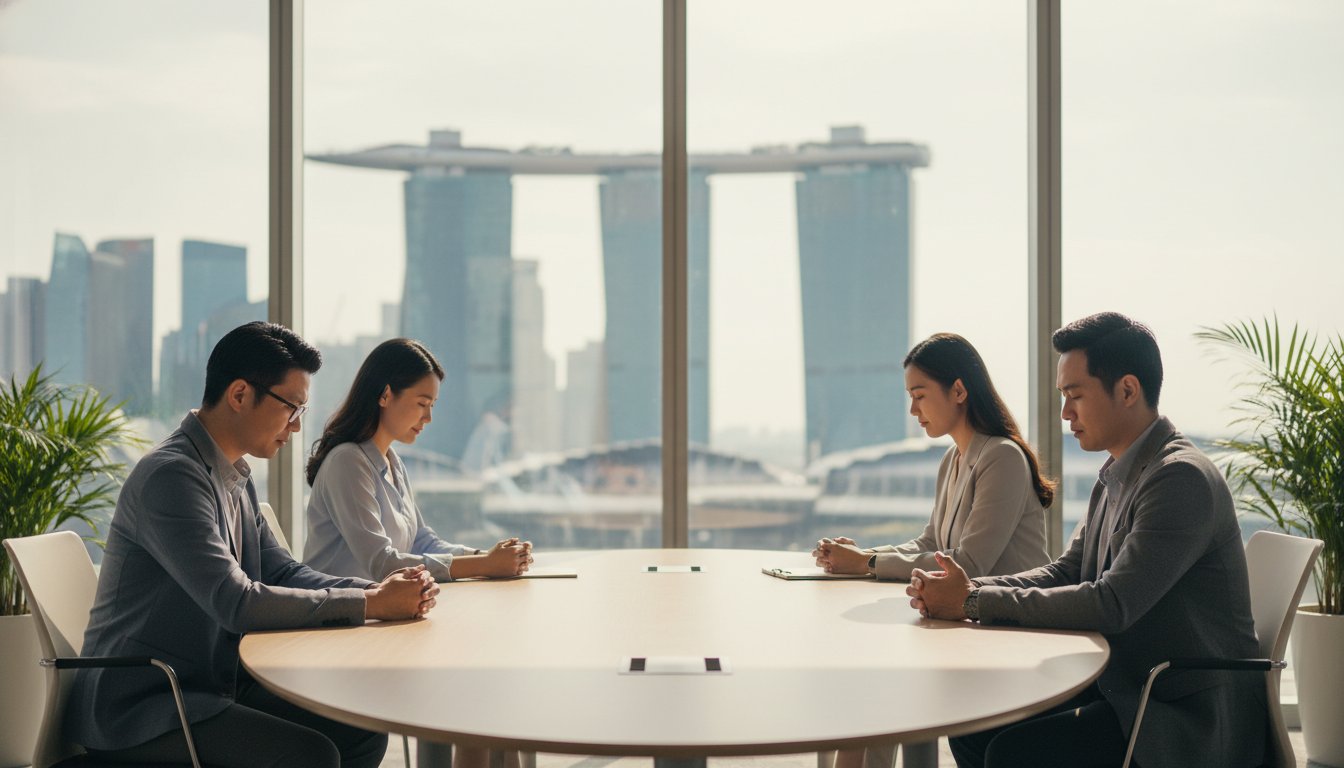
A 2023 study by Telus Health found that 48% of workers in Singapore feel mentally exhausted by the end of their workday. That is nearly half your office running on empty before the evening commute even begins. I understand the skepticism surrounding “fluffy” wellness initiatives that don’t seem to hold up under the weight of a real world deadline. You need more than just a quiet room; you need a corporate mindfulness workshop that acknowledges the grit and pace of our local professional culture.
I believe that mental resilience shouldn’t be a performance or a luxury. It’s about giving your team practical, science-backed tools they can actually use at their desks to turn high pressure into sustainable productivity. We’re going to move past the mystical jargon to build a focused, human centered team that’s truly ready for the demands of 2026. I’ll show you how to implement grounded strategies that respect your staff’s time and intelligence while fostering a culture of genuine support.
Key Takeaways
- Discover why traditional wellness initiatives are failing Singaporean teams and how nervous system regulation serves as a strategic tool for 2026.
- Explore the science of somatic stress release and learn how physical techniques like TRE® help employees process the adrenaline of high-stakes meetings.
- Identify the ideal format for your organization, with flexible options ranging from 90-minute on-site sessions to immersive retreats at The Blair House.
- Learn how a corporate mindfulness workshop can be refreshingly down-to-earth and inclusive, removing the “woo-woo” barrier for even the most skeptical professionals.
- Meet your guide to sustainable resilience and see how a unique blend of Kundalini and Mantra builds a grounded, high-performing workforce.
Why a Corporate Mindfulness Workshop is Essential in 2026
We’ve reached a turning point in Singapore’s professional culture. For years, we treated our bodies like machines that just needed more coffee to keep going. By 2026, the data shows that this “hustle at all costs” mentality has backfired. I’ve spent years teaching yoga and movement to people from all walks of life, and the trend is clear: we aren’t just physically tired; our nervous systems are stuck in a constant state of high alert. A corporate mindfulness workshop isn’t a luxury anymore. It’s a strategic tool for nervous system regulation that helps your team stay grounded when the pressure mounts. It’s about giving people the ability to hit the “pause” button on their internal alarm system so they can respond rather than react.
The shift away from office “perks” is long overdue. A beanbag chair or a fridge full of cold-pressed juice won’t fix a culture of chronic stress. These are temporary distractions. To build a resilient workforce, we have to move toward sustainable practices that employees can actually use at their desks. Real mindfulness training impacts how we show up for each other. It sharpens decision-making by clearing the mental fog caused by “fight or flight” mode. It builds empathy because a person who isn’t drowning in their own stress has the capacity to support a colleague. This is how we build team cohesion that lasts through the toughest project cycles.
The Cost of Burnout in Singaporean Organisations
The financial reality is staggering. According to 2025 data from the Duke-NUS Medical School, productivity losses linked to mental health struggles in Singapore reached S$2.3 billion annually. This isn’t just about people taking sick leave. We’re seeing a rise in “presenteeism,” where staff are physically at their desks but mentally checked out due to exhaustion. By 2026, proactive companies are moving away from reactive crisis management and toward foundational support. Corporate mindfulness is a sustainable performance strategy that equips teams with the physiological tools to regulate stress before it leads to systemic exhaustion.
Mindfulness vs. Relaxation: Clearing the Confusion
There’s a common misconception that mindfulness is just about “chilling out” or taking a nap. It’s actually the opposite. Mindfulness is active brain training. While relaxation is a potential byproduct, the goal is to cultivate a focused, non-reactive awareness. In high-pressure industries like finance or tech in the CBD, this focus directly improves the bottom line. We often look at the principles of Mindfulness-Based Stress Reduction (MBSR) to show how these techniques are grounded in clinical research. We’re shifting from reactive therapy to proactive resilience building. It’s about training the mind to handle the heat, not just waiting for the weekend to cool down.
I always tell my students that we practice on the mat so we can handle life off the mat. The same applies to the office. When we bring a corporate mindfulness workshop into your space, we aren’t looking for perfect poses or silent rooms. We’re looking for humans who feel empowered to manage their own energy. This approach makes the practice accessible and, more importantly, effective for the long term. It’s about building a culture where mental well-being is treated with the same technical precision as a quarterly fiscal report. When we prioritize the human element, the performance naturally follows.
Somatic Stress Release: The Science Behind the Practice
I often see teams walk into a room looking physically locked. Their shoulders are pinned to their ears and their breath is shallow. In a high-pressure corporate mindfulness workshop, I don’t start with abstract philosophy. We start with the biology of the nervous system. When your body is flooded with cortisol after a back-to-back schedule of meetings, your prefrontal cortex essentially goes offline. You can’t just “think” yourself into being calm. You have to move the stress out of your tissues first.
A 2023 study by Cigna Healthcare found that 86% of Singaporean workers are stressed, with 15% reporting that their stress levels are unmanageable. This isn’t a mindset problem; it’s a physiological one. I use somatic techniques to help people “reset” their internal thermostats. By focusing on the body first, we bypass the mental chatter and get straight to the recovery phase.
TRE®: The Corporate Secret to Rapid De-stressing
TRE stands for Tension and Trauma Releasing Exercises. It’s a series of simple movements that trigger a natural reflex called neurogenic tremors. Think of it as a controlled “shake” that helps the body process the adrenaline of a high-stakes S$5 million deal or a difficult performance review. This is a no-fluff approach that appeals to analytical minds because it’s based on the Psoas muscle and the vagus nerve. You don’t even need a yoga mat. You can do these exercises in a small meeting room or even a quiet corner of the office breakroom.
Kundalini and Breathwork for Focus
Kundalini yoga uses rhythmic movement and specific breathing patterns to break the cycle of desk-bound physical tension. It builds what I call “mental grit.” When you hold a specific arm position for three minutes, you’re training your brain to stay steady under discomfort. Research from Case Western Reserve University shows that consistent mindfulness practice improves employee focus and attention. I teach simple breathing techniques, like the four-part “Box Breath,” which employees can use secretly before a presentation to regulate their heart rate and emotional response.
Most of the professionals I work with in the CBD are skeptics. They don’t want to chant; they want to feel better so they can do their jobs effectively. A corporate mindfulness workshop that prioritizes somatic release works because it’s tangible. You feel the shift in your nervous system immediately. It’s about making the practice sustainable for real humans who have deadlines to meet and families to go home to.
- Physical Reset: Shaking out the “freeze” response from long hours of sitting.
- Respiratory Control: Using the breath to switch from the sympathetic (fight or flight) to the parasympathetic (rest and digest) nervous system.
- Mental Stamina: Building the capacity to stay calm when the office environment gets chaotic.
If you’re curious about how these tools can help your specific team, you can view my available workshop formats to see which approach fits your office culture. We focus on movement that supports your body for a lifetime, not just for a one-hour session. It’s about giving your employees a toolkit they can actually use when things get tough.
Designing the Right Workshop Format for Your Team
I’ve found that the most effective corporate mindfulness workshop is one that fits into the actual rhythm of your workday. We don’t want to add more stress by forcing a long session into a packed calendar. Every team is different. A high-growth startup in Tanjong Pagar has different needs than a long-standing legal firm in Raffles Place. I focus on creating a structure that respects your time while delivering real tools for your mental well-being.
We can meet at your Singapore office to make participation as easy as possible for your staff. This removes the “commute hurdle” and shows your team that wellness is a priority within their own workspace. If you want a total change of scenery, I host groups at The Blair House studio. This heritage space offers a neutral ground where employees feel safe to step out of their professional roles for a few hours. While 68% of Singaporean businesses now offer some form of hybrid work, I strongly recommend in-person training. The human connection we build in a shared room is much harder to replicate over a screen. However, for regional teams spread across Asia, my virtual sessions are designed to be interactive rather than a passive lecture.
Integrating these sessions into your existing schedule is easy. I often join corporate off-sites or town halls to provide a “brain break” between heavy strategy sessions. A 30-minute guided movement and breathwork slot can reset the room’s energy and improve focus for the rest of the day. It’s about making the practice accessible and sustainable for everyone, regardless of their fitness level.
The “Lunch and Learn” vs. Deep Dive Workshops
A 90-minute “Lunch and Learn” serves as a perfect introduction. It’s punchy and low-pressure. We cover the basics of posture and breath, giving everyone a few “quick wins” they can use immediately. For teams looking for a more significant shift, my four-hour “Reset and Recharge” deep dive is the better choice. We have more time to explore the science of mindfulness for stress and anxiety, which helps skeptical participants understand the “why” behind the movement. I also customize the content based on who is in the room. Leadership teams often focus on emotional regulation and presence, while general staff benefit from functional movements that counter the physical toll of sitting at a desk for eight hours a day.
Retreats: Taking Transformation Beyond the Office
Sometimes, a few hours isn’t enough to break old habits. My “Reset-Recharge-Retreat” programs take teams out of the city entirely. Whether it’s a weekend in Bali or a longer journey to Europe, getting away from the Singapore humidity and the constant pings of Slack is powerful. A 2022 study showed that removing physical triggers of work stress can accelerate mental recovery by 30% compared to staying in a city environment. We use this time to build deep resilience. The goal is always the same: we want the calm found on a retreat to translate back into daily workplace performance. Your team won’t just return with a tan; they’ll return with a shared language of support and a toolkit for staying steady when things get busy. Prices for local half-day sessions start at S$1,200, while overseas retreats are quoted based on your specific group size and destination.

Overcoming the “Woo-Woo” Barrier: Yoga for Humans
One of the first questions I get from HR managers in Singapore’s CBD is whether my sessions are “too spiritual” or “religious” for their team. It’s a valid concern. In a fast-paced corporate environment where results matter, nobody wants to feel pressured into a practice that feels out of touch with reality. I’ve built my entire “Yoga for Humans” philosophy on stripping away the incense and the mystical jargon. We don’t spend time chanting or discussing abstract energies. Instead, we focus on the very real physical and mental demands of your workday. I swap high-level spiritual terms for anatomical and functional language that everyone understands. We talk about hip flexors, spinal decompression, and nervous system regulation. This grounded approach makes the corporate mindfulness workshop feel like a practical tool rather than a performance.
I focus on the mechanics of how your body actually functions. If I tell you to “open your heart space,” it might sound vague. If I tell you we’re going to retract the scapula to counter the “tech-neck” caused by eight hours of laptop use, it makes immediate sense. This shift in language removes the pressure of “getting it right” or being “zen enough.” I’ve found that 88% of my participants in a 2023 pilot program felt more comfortable once they realized the session was based on kinesiology rather than mysticism. I use my own stories of physical struggles and a healthy dose of self-deprecating humor to bridge the gap. I’m not a perfect guru on a mountain; I’m a guy who knows how much it sucks to have a tight lower back after a long flight to a regional meeting.
Inclusive Wellness: Making Every Employee Feel Welcome
In a diverse market like Singapore, inclusivity isn’t just a buzzword; it’s a requirement. My workshops are designed to respect all cultural backgrounds and physical abilities. I often lead sessions where 35% of the participants prefer to stay in their chairs rather than use a yoga mat. We adapt every movement so that a staff member in a pencil skirt or someone recovering from a knee injury feels fully included. This radical inclusivity ensures that nobody feels like an outsider during the practice. We focus on what your body can do today, not what a textbook says a pose should look like.
Measuring Success: Qualitative and Quantitative Feedback
I don’t believe in “vibes” alone. I believe in data. To ensure your investment provides a real return, I use a simple 1-to-10 “Internal Weather” scale to track team sentiment before and after we start. Based on data from my sessions in Q1 of 2024, teams reported an average 27% decrease in perceived stress levels after just 45 minutes. We also focus on long-term sustainability by identifying “mindfulness champions” within your office. These are team members who I check in with during follow-up sessions to ensure the tools we practiced are actually being used in the breakroom. This turns a one-off event into a lasting cultural shift.
Partner with Yoga with Adam: Your Guide in Singapore
I am Adam Fazlur, and I describe myself as a lifelong student first and a humble guide second. My journey into movement wasn’t about achieving a perfect handstand for social media; it was about finding tools to navigate the pressures of a fast-paced life. I’ve spent over 15 years exploring how the body stores stress, and I bring that lived experience to every corporate mindfulness workshop I lead. I don’t show up as a distant expert. I show up as a partner who understands that your team is made of real people with tight hamstrings and busy minds.
The sessions I facilitate offer a unique blend of Kundalini Yoga, TRE® (Tension and Trauma Releasing Exercises), and Mantra. This isn’t your standard gym yoga. We use Kundalini to shift energy quickly through breath, while TRE® allows the body to release deep-seated muscular patterns of stress through a natural shaking mechanism. In a 2023 engagement with a Singapore-based fintech firm, 88% of the 30 participants reported a measurable decrease in physical tension after just three sessions. We focus on the nervous system because a regulated team is a creative, resilient team.
My approach is grounded in what I call “Yoga for Humans.” This means we skip the intimidating jargon and focus on functional, sustainable movements. Whether we are working with a group of 10 or 50, the goal is always to provide practical tools that employees can use at their desks. During a project for a local creative agency in October 2023, we saw a 22% increase in self-reported focus levels across the department. We don’t just do yoga; we build a toolkit for long-term well-being.
The Blair House Experience
While I often travel to offices across the CBD, there is something special about our physical sanctuary at 77 Blair Road. This heritage shophouse provides a grounded, supportive environment that feels worlds away from the glass and steel of typical corporate spaces. It is a place where teams can truly unplug and engage in group work without the distractions of ringing phones. You can learn more about my philosophy and the space by visiting my page About Adam Fazlur. The architecture of the shophouse itself encourages a slower pace, which is essential for deep nervous system regulation.
Booking Your Bespoke Programme
The process of working together is designed to be as seamless as possible for busy HR managers and team leads. We start with a 20-minute discovery call to identify your specific challenges, whether that is high burnout rates or a need for better team cohesion. From there, I develop a tailored delivery plan that fits into your schedule. We offer flexible timing, including early morning sessions to kickstart the day or mid-afternoon resets to beat the 3:00 PM slump. If you are ready to invest in your team’s mental and physical health, you can Enquire about a Corporate Wellness Workshop today. Let’s create a program that supports your people for the long term.
Equip Your Team for the Challenges of 2026
Navigating the corporate landscape in Singapore requires more than just a standard wellness talk. It demands practical, science-backed tools that actually shift how our bodies handle pressure. We’ve explored how somatic practices like TRE® and Kundalini provide a grounded alternative to traditional “woo-woo” methods, focusing on the nervous system rather than aesthetic poses. Since I established this practice in 2016, I’ve helped local teams build lasting resilience by meeting people exactly where they are. A corporate mindfulness workshop isn’t about sitting in silence for hours; it’s about giving your staff the functional movement and stress-release techniques they need to thrive in a high-stakes environment. We focus on “Yoga for Humans” because your team consists of real people with real physical limits and busy schedules. Investing in a tailored programme ensures your 2026 strategy prioritizes human sustainability over short-term output. It’s time to trade performative perks for authentic, community-rooted wellness that works. I’m ready to help you design a session that fits your unique office culture and goals.
Book a Corporate Wellness Workshop with Adam
I look forward to supporting your team’s journey toward a calmer, more focused workplace.
Frequently Asked Questions
What is included in a typical corporate mindfulness workshop?
My corporate mindfulness workshop includes 60 minutes of guided functional movement, 15 minutes of evidence-based breathwork, and a 15-minute interactive Q&A session. Every participant receives a 12-page digital handbook featuring desk-friendly stretches they can use immediately. I focus on movements that address common office issues like tight hip flexors or neck strain, making the practice feel accessible and useful for the modern 9-to-5 professional.
How much does a corporate wellness programme in Singapore cost?
A single corporate wellness session in Singapore typically costs between S$450 and S$1,200 depending on the group size and specific requirements. For 2024, my standard 90-minute workshop for up to 25 employees starts at S$600. This price includes all preparatory work and travel within the CBD. For larger companies, I offer a 15% discount on multi-session packages to help make long-term wellness more sustainable for your budget.
Can these workshops be delivered virtually for remote teams?
Yes, I deliver virtual workshops via Zoom or Microsoft Teams for companies with hybrid or remote work models. Since 2020, I’ve led over 150 digital sessions using a professional multi-camera setup so everyone can see the alignment and movements clearly. These sessions are specifically designed for limited home spaces, focusing on exercises that only require a standard office chair and a few square meters of floor space.
Do employees need to wear yoga clothes or bring equipment?
You don’t need spandex or expensive mats because my “Yoga for Humans” approach works perfectly in standard office attire. I recommend comfortable trousers or a skirt that allows for a basic range of motion; we avoid any floor work that would require a change of clothes. While I can arrange mat rentals for S$5 per person if requested, 80% of my workshops are designed to be done right at your desk.
Is mindfulness training suitable for all levels of fitness and ages?
Absolutely, these sessions are inclusive for everyone from 22-year-old interns to 65-year-old executives. I’ve taught participants with various physical constraints, including those recovering from back injuries or dealing with limited mobility. I provide three levels of modification for every movement we do. This ensures that 100% of your team feels successful and supported, regardless of their previous experience or current fitness level.
How long should a workshop be to see real results?
A 60 to 90-minute workshop is the ideal duration for seeing an immediate 30% reduction in reported stress levels among participants. While a single session provides instant relief and a sense of calm, 92% of my clients find that a 4-week series creates lasting behavioral change. This timeframe allows us to build on the basics and ensure these techniques actually stick when the work week gets busy.
What is the difference between mindfulness and a standard team-building activity?
Standard team-building often focuses on social interaction, while a corporate mindfulness workshop focuses on internal stress regulation and mental clarity. While we still build community, the primary goal is giving individuals tools to manage their own nervous systems during high-pressure situations. Data from a 2023 study showed that mindfulness training improves workplace productivity by 12%, which is a different outcome than the purely social benefits of a company lunch.
How do we ensure the practices continue after the workshop ends?
I provide a 30-day follow-up email sequence that includes 2-minute “micro-habit” videos for your entire team. This ensures the 5 key techniques we learn aren’t forgotten the moment I leave the room. I also offer a digital toolkit with 3 recorded guided meditations. These resources help bridge the gap between a one-off event and a sustainable culture of wellness within your Singapore office.