

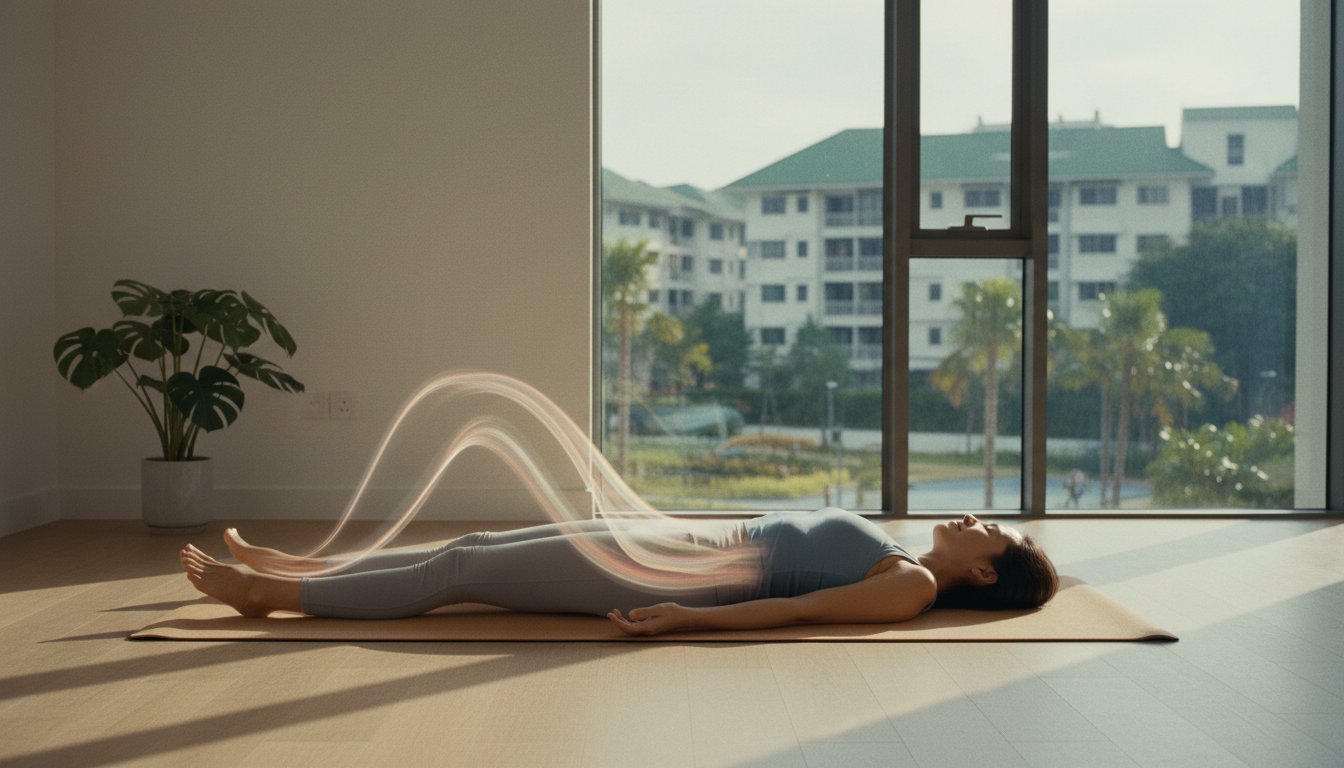
Have you ever spent an hour on a massage table in Orchard, only to feel those same knots creep back into your shoulders by the time you’ve reached the MRT? It’s a common story for many of us here in Singapore-that heavy feeling of being “wired but tired,” where your brain is foggy but your body simply refuses to switch off. This is where tension & trauma releasing exercises (TRE®) come in. Instead of trying to fix things from the outside in, TRE taps into a natural biological “reset button” built right into your nervous system to release the deep-seated stress that traditional stretching or massage often misses.
In this guide, I want to share how we can use gentle, involuntary shaking-something every human body is naturally designed to do-to discharge stored tension and restore your internal balance. We’ll explore how these simple movements can lead to better sleep, reduced physical pain, and a genuine sense of calm that lasts long after you leave the mat. It’s about building a sustainable, practical tool for self-regulation that works for real bodies in the real world. Let’s dive into how you can start shaking off the pressure and finally give your nervous system the break it deserves.
Key Takeaways
- Discover how to activate “Neurogenic Tremors,” your body’s natural biological mechanism for discharging high arousal and restoring inner calm.
- Learn the science behind the Psoas muscle and how gentle shaking can help reset a nervous system stuck in a chronic fight-or-flight response.
- Understand why tension & trauma releasing exercises are for everyone, helping to clear both deep-seated patterns and the daily micro-stresses of life in Singapore.
- Get a step-by-step preview of the seven preparatory movements designed to safely fatigue the muscles and initiate a restorative release.
- Explore how Adam’s down-to-earth approach integrates TRE with yoga and meditation to create a sustainable, “for humans” path to long-term well-being.
What are Tension & Trauma Releasing Exercises (TRE®)?
When we talk about stress, we often focus on the mind. But as a teacher, I’ve seen how our bodies carry the weight of our daily lives long after the workday ends. Tension & trauma releasing exercises (TRE®) are a series of seven simple movements that assist the body in releasing deep muscular patterns of stress, tension, and trauma.
Developed by Dr. David Berceli during his time working in global conflict zones, TRE® was originally designed to help large groups of people recover from extreme stress. However, I view it through the lens of “Yoga for Humans”: if you have a nervous system, you can benefit from this practice. It isn’t about achieving a perfect aesthetic pose; it’s about tapping into a biological reflex we all share.
The hallmark of TRE® is the induction of “Neurogenic Tremors.” These are the body’s natural way of discharging high arousal and returning us to a state of equilibrium. It’s a grounded, physical process that requires no “zen” expertise-just a willingness to listen to your body.
The Biological “Reset Button” for Modern Stress
In the wild, an animal that survives a life-threatening chase will instinctively shake its body to discharge the excess adrenaline. Humans have the same “freeze” response, but we’ve learned to suppress the recovery shake. In the high-pressure Singapore hustle, where we are often in a state of “perpetual alert” due to deadlines and constant connectivity, we stay stuck in that high-arousal state.
Neurogenic Tremors are a rhythmic, involuntary shaking that down-regulates the nervous system, signaling to the brain that the “danger” has passed.
Why We Stopped Shaking (And Why We Need to Start)
Socially, we’ve been conditioned to view shaking as a sign of weakness, fear, or loss of control. We “keep a stiff upper lip,” but this suppression comes at a cost. When we bottle up that energy, it manifests as chronic back pain, tight jaws, and the heavy exhaustion of adrenal fatigue.
- From Performing to Allowing: Unlike traditional exercise where you “do” a movement, TRE® is about “allowing” a process to happen.
- Sustainable Wellness: By re-activating this natural reflex, we move away from performative fitness and toward a practice that supports our long-term well-being.
- Reclaiming the Reflex: We are simply giving the body permission to do what it was designed to do before social stigmas got in the way.
The Science of Shaking: How TRE Calms the Nervous System
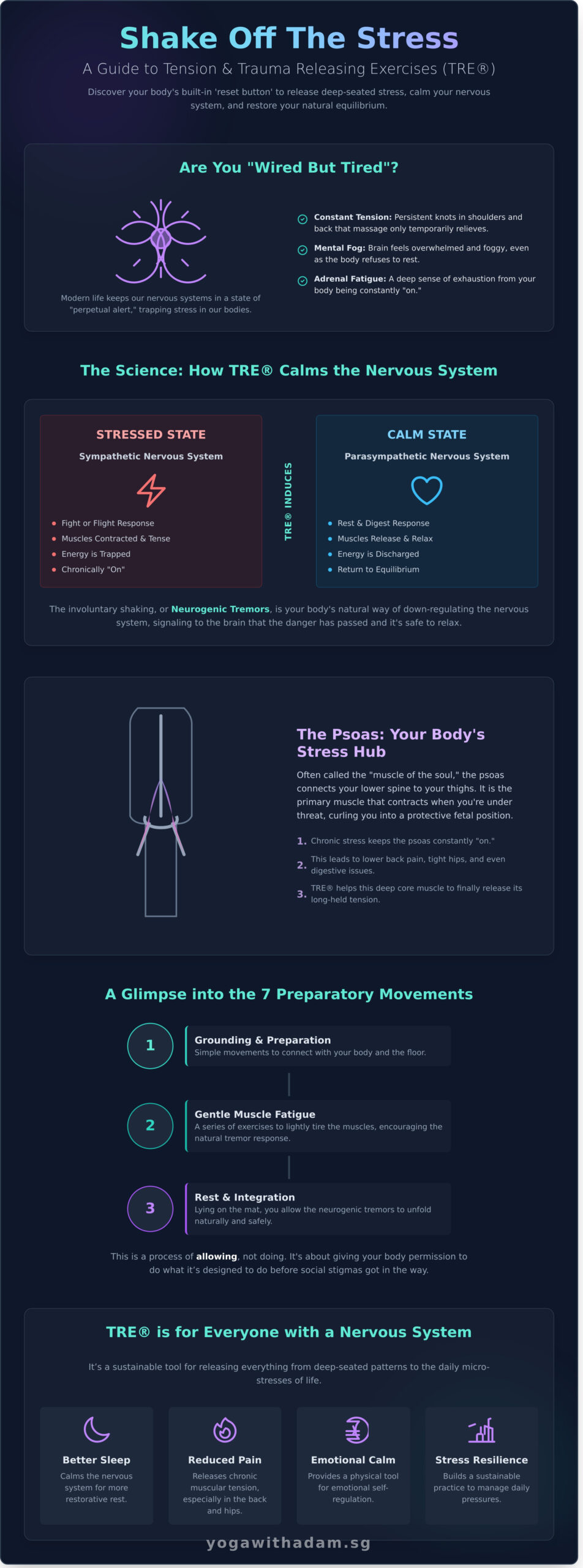
Most of us spend our lives trying to keep it together. We hold our posture, we hold our breath, and we definitely hold our stress. But tension & trauma releasing exercises (TRE) ask us to do something counter-intuitive: let go of control. Unlike a gym workout where you “voluntarily” move your muscles to achieve a goal, TRE taps into an “involuntary” neurogenic shake. This is your body’s built-in mechanism for discharging excess energy, moving you from a state of high-alert (the sympathetic nervous system) back into a state of rest and recovery (the parasympathetic nervous system).
I like to think of it as a biological reset button. When we experience stress, our bodies prepare to fight or flee. In our modern Singaporean lives, we rarely get to actually run away from a stressful meeting or a crowded commute, so that energy stays trapped in our tissues. TRE provides a safe way to let that energy out.
The Psoas Muscle: Your Body’s Stress Storage
Deep within your core lies the psoas muscle, often called the “muscle of the soul.” Anatomically, it connects your lower spine to your upper thighs, making it the primary muscle responsible for curling you into a fetal position when you’re under threat. When we are chronically stressed, the psoas stays contracted. This constant “on” switch is a major culprit behind lower back pain, tight hips, and even digestive issues.
At Yoga with Adam, we focus on functional movement that supports the body’s natural ability to soften these deep-seated patterns. By using TRE to release the psoas, we aren’t just stretching a muscle; we are telling the nervous system that the “danger” has passed.
Rewiring the Brain-Body Connection
TRE works through a “bottom-up” approach to mental health, meaning we start with the body’s physical sensations to calm the mind, rather than trying to think our way out of stress. There is a constant feedback loop between your brainstem and your muscles. When your muscles shake and release, they send a signal to the brain saying, “We are safe now.”
Recent research on the effects of TRE suggests that this process can help regulate the nervous system without the need to revisit or talk about specific traumatic events. It is a powerful way to practice tension & trauma releasing exercises because it bypasses the analytical mind entirely, allowing your physiology to lead the way toward healing.
- Voluntary movement: Lifting a weight or stretching (conscious control).
- Involuntary release: The TRE shake (the body’s natural discharge).
- The Result: A quieter mind and a more resilient body.
Myth vs. Reality: Addressing Common Misconceptions
When I first introduce tension & trauma releasing exercises to my students here in Singapore, the most common response is a hesitant, “But Adam, I haven’t really been through a major trauma.” It’s a fair point. The word “trauma” carries a lot of weight, often bringing to mind extreme, life-altering events. However, in the context of TRE®, the “T” stands just as much for “Tension”-the kind we carry in our shoulders after a long day at the office.
Do I Need to Be “Traumatized” to Do TRE?
The short answer is a resounding no. In our high-pressure environment, we often experience “micro-traumas”-the relentless ping of work notifications, a stressful commute, or the chronic pressure of meeting expectations. I like to define trauma simply as anything that overwhelms your nervous system’s ability to cope in the moment. Over time, this unreleased tension accumulates, often leading to burnout or adrenal fatigue. Utilizing Trauma Release Exercises is actually a fantastic preventative tool, helping you clear the “backlog” of daily stress before it manifests as physical pain.
While TRE provides an excellent somatic tool for managing this buildup, many also find that actively disconnecting through outdoor exploration is a powerful complement. For those seeking inspiration for remote travel and camping, communities like Adventurerz offer resources and a hub for like-minded people looking to trade city stress for natural tranquility.
The physical toll of long-term stress can be significant, impacting everything from skin health to overall vitality. For those interested in learning about comprehensive approaches to men’s health and aesthetic wellness in this context, you can read more.
The “It Looks Weird” Factor
I’ll be the first to admit that watching a TRE® session can look a bit unusual. Because the body begins to tremor, people sometimes worry it looks like a seizure or that they’ll lose control. It’s actually a deeply natural biological response. Think of a deer in the woods; after escaping a predator, it will physically shake to discharge the adrenaline and reset its system.
Unlike some modern yoga practices that can feel performative or focused on the “perfect” pose, tension & trauma releasing exercises are about raw, authentic movement. At our Blair House studio, we prioritize a judgment-free environment where your body can do exactly what it needs to do. Most importantly, you are always in the driver’s seat. We focus heavily on “self-regulation,” meaning you can stop the tremors at any second simply by straightening your legs. You are always in control of the process, making it a safe, sustainable way to support your long-term well-being.
What to Expect in a TRE Session
Walking into a session might feel a bit mysterious if you’ve never done it before, but the process is actually quite structured, grounded, and supportive. We aren’t here for “perfect” poses or performative movements; we’re here to give your nervous system a much-needed reset. During a session of tension & trauma releasing exercises, I’ll guide you through a specific sequence designed to help your body let go of the stress it’s been holding onto.
The 7 Exercises: A Physical Warm-Up
We begin with seven simple movements. I like to call this “Yoga for Humans”-it doesn’t matter if you can’t touch your toes or if you haven’t stepped into a gym in years. We focus on the ankles, calves, quads, and pelvis, using gentle movements to fatigue these muscle groups slightly. We aren’t forcing a reaction; we are simply “inviting” the tremor response. By creating a little bit of healthy muscular tension, we open the door for the body’s natural release mechanism to take over.
Once we’ve completed the standing portion, we transition to the floor. Lying on a mat in a comfortable position, we initiate the neurogenic tremors. This is where the tension & trauma releasing exercises truly move from a physical workout to a nervous system release. My role as your provider is to “hold space,” which really just means ensuring you feel safe, comfortable, and in control of the experience. I’ll teach you how to self-regulate, giving you the tools to stop or slow down the shaking whenever you feel like it.
We always conclude with an “integration” phase. This is a period of quiet rest and grounding after the shaking stops, allowing your brain and body to process the shift and return to a state of calm equilibrium.
Immediate Benefits You Might Feel
While everyone’s experience is unique, many of my students here in Singapore report feeling a distinct shift after just one session. Because we are working directly with the body’s physiology, the results are often quite practical:
- Physical: A noticeable reduction in muscle pain (especially in the back and neck), improved digestion, and often the best night’s sleep you’ve had in weeks.
- Emotional: A sense of feeling “lighter,” as if a physical weight has been lifted, and an increased resilience to the daily stressors of city life.
- Mental: Improved mental clarity, better focus, and a genuine sense of being “grounded” and present in your body.
If you’re ready to experience this release for yourself, you can find our latest session times and details at yogawithadam.sg.
Start Your Healing Journey with Yoga with Adam
At Yoga with Adam, I believe in tools that work for real people living real lives. My approach to tension & trauma releasing exercises (TRE) in Singapore is grounded in the body’s natural ability to heal itself without the need for complex philosophy or performative poses. I see TRE as a vital piece of the wellness puzzle, helping you “shake off” the accumulated stress of city living.
While TRE is a powerhouse on its own, it works best when integrated into a holistic routine. I often recommend it as a companion to our Kundalini Yoga classes to help process the energy we move, or alongside Meditation/Mantra practices to provide a physical outlet for mental stillness. For those seeking a more tailored experience, my private 1-on-1 sessions offer a safe, focused environment to explore these releases at a pace that feels right for you.
Why Practice TRE with a Certified Provider?
The most important concept in TRE is “titration”-the practice of doing just enough to facilitate healing without overwhelming your nervous system. As a certified provider, I guide you through the process to ensure you aren’t doing too much too soon. My goal is to teach you how to self-regulate, giving you the skills to eventually practice tension & trauma releasing exercises safely in your own home. While home practice is the goal, there is also immense value in the group energy of our workshops and retreats, where the collective “humanness” of the room makes the experience feel supported and grounded.
Booking Your First Session in Singapore
Ready to start? You can find our community at 77 Blair Road, a beautiful, light-filled shophouse space that feels more like a home than a sterile gym. If you are currently outside of Singapore or prefer the privacy of your own space, I also offer online sessions that bring the same level of care and expertise to your screen.
Whether you join us in person or online, remember that this isn’t about achieving a perfect result or a specific aesthetic. We are simply humans helping other humans feel better. You don’t have to be perfect; you just have to be human. Visit yogawithadam.sg today to book your first session and begin your journey toward a more regulated, relaxed version of yourself.
Ready to Shake Off the Stress?
We’ve explored how shaking isn’t just a quirk of nature; it’s a powerful, biological tool for resetting your nervous system. By incorporating tension & trauma releasing exercises into your wellness routine, you move beyond simply talking about stress and begin physically discharging it from your body. Whether you are navigating daily burnout or deeper patterns of tension, remember that this practice is accessible to every body. There are no complicated poses to master and no flexibility required-just a willingness to listen to what your body needs.
As a Certified TRE® Provider with years of somatic experience, I focus on “Yoga for Humans,” ensuring you feel supported and comfortable every step of the way. I invite you to join me at my beautiful, private studio at The Blair House in Singapore for a guided session tailored to your journey. Together, we can create a sustainable path toward feeling more grounded and resilient in your everyday life.
Take the first step toward a calmer you and book a TRE session with Adam in Singapore today. I look forward to welcoming you into the studio and helping you rediscover your body’s natural ability to heal.
Frequently Asked Questions
Is TRE safe for everyone to try?
Generally, yes, because it taps into a natural biological reflex that every human body possesses. However, the key is self-regulation. We always prioritize your comfort and safety above all else. If you have a history of complex trauma or significant physical limitations, I recommend starting with a certified provider here in Singapore to ensure you feel supported and grounded as you navigate these new sensations.
How is TRE different from regular yoga or stretching?
While yoga focuses on intentional movement and alignment, tension & trauma releasing exercises use specific movements to slightly fatigue the muscles and trigger an involuntary shaking response. Instead of you “doing” the stretch, your nervous system takes over the release. It is less about hitting a perfect pose and more about allowing your body to discharge stored stress in its own way.
Can I learn TRE on my own or do I need a teacher?
You can certainly find introductory videos online, but I usually recommend a few sessions with a teacher first. In a busy, high-pressure city like Singapore, our nervous systems are often on high alert. A guide helps you learn how to “stop” the tremors and stay present, ensuring the practice remains a sustainable tool for your long-term well-being rather than something that feels overwhelming.
How often should I practice Tension & Trauma Releasing Exercises?
Consistency beats intensity every time. For most of us, practicing tension & trauma releasing exercises two to three times a week for about 10 to 15 minutes is plenty. It is not a “no pain, no gain” workout. We want to teach the body that it is safe to relax, so we avoid overdoing it and focus on listening to what our physical self needs each day.
What happens if I start crying or get emotional during TRE?
It is completely normal and actually quite common! Our bodies store emotions physically, and as the muscles let go, those feelings might surface. If tears come up, think of it as a “system update” for your nervous system. The goal is to stay present with the sensation without judgment. If it ever feels too intense, you simply straighten your legs to stop the shaking immediately.
Can TRE help with chronic back pain or fibromyalgia?
Many people find relief because TRE specifically targets the psoas muscle, where we hold a lot of our “fight or flight” tension. By releasing these deep muscular patterns, you might notice a reduction in the chronic tightness associated with back pain or fibromyalgia. It is a gentle, accessible way to support your body’s natural healing process alongside your regular medical care and physical therapy.
How long does it take to see results from shaking?
Most people feel a sense of “lightness” or enjoy better sleep immediately after their very first session. However, for long-term changes in how you handle stress in Singapore’s fast-paced environment, I suggest giving it four to six weeks of regular practice. You will likely notice you are less reactive to daily annoyances and feel more grounded and steady in your own skin.
Is there anyone who should NOT do TRE?
While we strive for radical inclusivity, TRE is not recommended if you have had recent abdominal or pelvic surgery, are pregnant, or have untreated high blood pressure. If you have a history of severe psychological conditions or psychosis, please consult your healthcare provider first. We want this to be a sustainable practice for real humans, which means being honest about when your body needs medical clearance.