

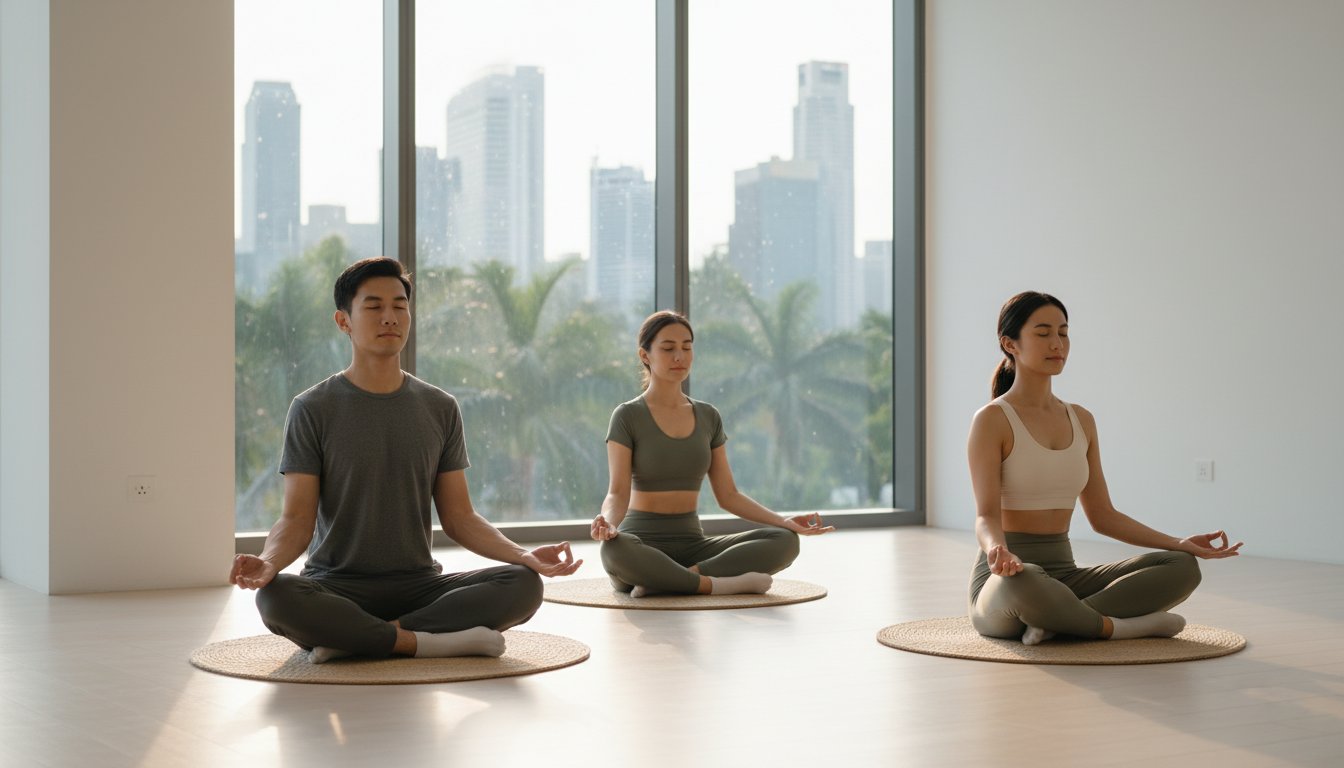
Let’s be honest: life in Singapore doesn’t seem to be slowing down in 2026. Between back-to-back meetings and the constant hum of digital noise, most of us are feeling more than just a little burnt out-we’re feeling disconnected from our own bodies. You might have heard of kundalini yoga and felt a healthy dose of skepticism. Maybe you’ve seen the intimidating poses or the heavy emphasis on mysticism and thought, “That’s just not for me.” I’m right there with you; I believe yoga should support your life, not complicate it.
In this grounded guide, we’re stripping away the “woo-woo” to focus on what actually matters: practical tools for modern living. We’ll explore how this “Yoga of Awareness” can help you regulate your nervous system, build mental stamina, and find a welcoming community right here at home. Whether you’re looking for better emotional regulation or simply a more sustainable way to stay steady in a fast-paced world, this is yoga for humans. No performance required-just a genuine curiosity and a desire to feel a bit more like yourself again.
Key Takeaways
- Learn why we view yoga as a practical technology for your mind and body, specifically designed to fit the fast-paced reality of 2026 Singapore lifestyles.
- Discover how the “formulaic” structure of a Kriya works biologically to recalibrate your nervous system and support your endocrine health.
- Understand the internal intensity of kundalini yoga and how it differs from the athletic flow of Vinyasa or the postural focus of Hatha.
- Get a practical, unpretentious guide to your first class at Blair Road, covering everything from what to wear to the role of TRE® and mantra.
Demystifying Kundalini: The Yoga of Awareness for Modern Humans
If you’ve ever felt like your brain has too many tabs open, you’re in the right place. At its core, kundalini yoga isn’t just a physical workout or a series of poses to master for a social media feed; it is a practical technology designed for the mind and body. We often refer to this as “Yoga for Humans.” It’s about taking ancient, time-tested tools and making them accessible for our fast-paced 2026 lifestyles-whether you’re navigating a high-pressure job in the CBD or managing a busy household.
One of the biggest hurdles for beginners is the “spiritual” barrier. Let’s clear that up right now: you do not need to be spiritual, and you certainly don’t need to be flexible to start. When we look at What is Kundalini Yoga? from a functional perspective, the goal is simple. We use specific movements, breathwork, and sound to balance the glandular system and strengthen the nervous system. It’s about building a body that can handle the stress of modern life without burning out.
Why call it the ‘Yoga of Awareness’?
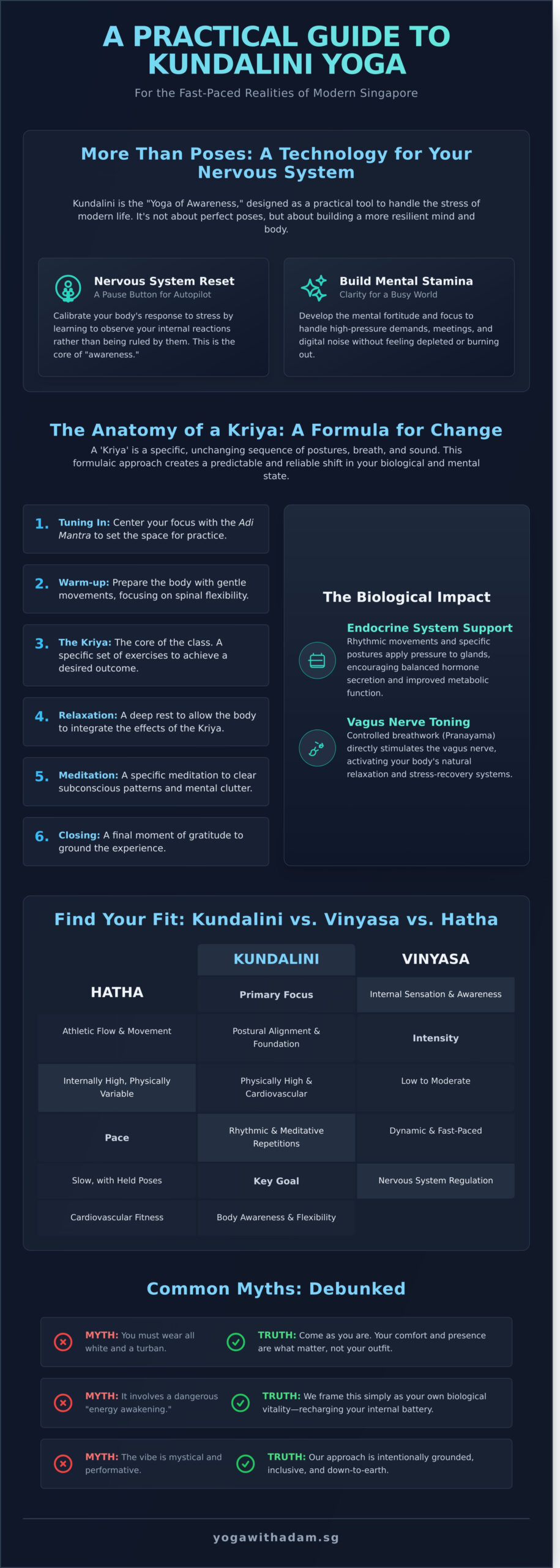
In our modern world, most of us spend our days on “autopilot,” reacting to emails, traffic, and demands without a second thought. Awareness is the ability to hit the pause button. It is the skill of observing your internal reactions rather than being ruled by them. By practicing kundalini yoga, we cultivate the clarity to see our habits for what they are. Kundalini is a nervous system reset rather than an energy awakening.
Debunking common Kundalini myths
There are plenty of misconceptions floating around that can make this practice feel intimidating. Let’s break a few down:
- The White Clothes: You might see practitioners in all-white head-to-toe. While some find it helpful for their focus, it is a personal choice, not a requirement. Come in your favorite gym gear or an old t-shirt; we care about your presence, not your outfit.
- The “Danger” Factor: You may have heard “scary” stories about kundalini energy. In our studio, we frame this energy simply as biological vitality-it’s just your own internal battery being recharged.
- The Vibe: My approach is intentionally grounded, inclusive, and refreshingly down-to-earth. We keep things transparent and sustainable, ensuring the practice supports your real-world life in Singapore rather than feeling like a performative ritual.
How Kundalini Works: The Anatomy of a Kriya
If you’ve ever followed a precise recipe to bake a loaf of bread, you already understand the logic behind kundalini yoga. It is a formulaic practice. Unlike a standard flow class where the sequence might change every day, Kundalini is built around the “Kriya.” In Sanskrit, Kriya means “completed action.” Each Kriya is a specific sequence of postures, breath, and sound designed to produce a predictable shift in your mental or physical state.
Biologically, we use these sequences to target the endocrine system and the vagus nerve-the “command centre” of our relaxation response. By applying rhythmic pressure and specific angles to the body, we encourage the glandular system to secrete more efficiently, while the breathwork (Pranayama) acts as the high-octane fuel for the entire process. This isn’t about “perfect” shapes; it’s about a functional internal shift. In fact, scientific research on Kundalini Yoga has shown that this specific combination of movement and meditation can significantly improve cognitive function and stress management.
The 6 Components of a Standard Class
In our sessions, we follow a consistent six-part structure to ensure you feel grounded and safe while exploring the practice. This structure includes:
- Tuning In: Usually with the Adi Mantra to center our focus.
- Warm-up: Gentle movements to prep the spine.
- The Kriya: The core “recipe” of the class.
- Relaxation: A deep rest to let the body integrate the changes.
- Meditation: To clear the mental clutter.
- Closing: A final moment of gratitude.
The repetitive movements within the Kriya are key. By repeating a motion for several minutes, we bypass the “chatter” of the analytical mind, helping us break old mental patterns and leaving us with that signature “reset” feeling that makes kundalini yoga so unique for busy Singaporeans looking to decompress.
Mantra and Mudra: The ‘Code’ of the Practice
We often describe Mantras and Mudras as the “code” of the practice. A Mantra isn’t just “chanting”; it’s a sound current. The tongue hitting the roof of the mouth stimulates meridian points that affect brain chemistry. Similarly, Mudras (hand positions) act like reflexology for the brain. This principle of mind-body connection through specific points isn’t limited to yoga; many find that practices like professional ear piercing singapore also engage with the body’s energy pathways. You don’t have to “believe” in them for them to work-the physical vibration and pressure do the heavy lifting for you, making the practice accessible to everyone, regardless of their background.
Kundalini vs. Vinyasa vs. Hatha: Which One Do You Need?
Choosing a yoga style in Singapore can feel a bit like picking a lunch spot at a busy hawker centre-there are plenty of great options, but each serves a very different purpose. If you’ve spent time in a Vinyasa class, you’re likely used to a fluid, breath-to-movement flow that feels almost like a dance. Hatha, by contrast, is the steady foundation, focusing on physical alignment and holding postures to build strength and balance.
kundalini yoga operates on a different frequency. While Vinyasa and Hatha are more externally athletic, Kundalini is internally intense. You won’t necessarily be doing 50 Chaturangas or complex arm balances, but you will be working your nervous system through repetitive movements and specific breathwork. It’s less about the “shape” your body makes and more about the “shift” happening inside. This makes it a favorite for those in high-pressure corporate roles or anyone dealing with burnout; it’s a practical tool to reset a frazzled mind. Research even suggests that Kundalini Yoga for anxiety can be a helpful supportive practice for managing stress levels.
When to choose Kundalini
Choose Kundalini when you need mental clarity, a way to break through stubborn habits, or a boost in emotional resilience. It’s often described as the “fast-track” of yoga because many students feel a tangible shift in their mood and energy after just one session. You don’t need a “yoga body” to start; you just need to be curious. For those who want to dive deeper without the pressure of a group setting, exploring the benefits of private yoga can provide a tailored experience that fits your specific goals and schedule.
Can you do both?
We actually recommend it. kundalini yoga complements a physical Vinyasa or Hatha practice by adding the mental stamina and focus that physical poses alone sometimes miss. A sustainable weekly routine might include a mix of functional movement for the joints and Kundalini for the mind. My own background in functional movement is designed to bridge this gap, ensuring your practice is grounded, safe, and effective. By combining styles, you create a well-rounded toolkit for navigating life in a fast-paced city like Singapore, keeping both your body and your nervous system in check. If you’re still unsure which practice suits your lifestyle better, our detailed guide on kundalini vs vinyasa for busy Singapore professionals can help you make an informed decision based on your specific goals and schedule.
Your First Kundalini Class: A Practical Survival Guide
Stepping into our Blair Road studio for the first time, you’ll find a space that values authenticity over performance. Whether you are visiting us in person in Singapore or logging into a digital session from home, the goal of kundalini yoga is to meet yourself exactly where you are. Forget the pressure to wear high-end “yoga brands” or matching sets; comfort is our only requirement. Reach for loose, breathable layers that won’t restrict your ribcage when we start the deep breathwork.
You may notice students sitting on sheepskins or thick cotton blankets. We use these not for the “look,” but to provide a soft, insulating barrier that keeps you comfortable during seated meditations. We also practice with our eyes closed for about 90% of the session. This helps remove the temptation to compare your progress to your neighbor’s, allowing for a truly internal experience. If the chanting or repetitive movements feel a bit “weird” at first, that’s okay. Stay grounded, keep breathing, and join in only when you feel ready. At Yoga with Adam, we prioritize your comfort over perfect choreography.
The First-Timer’s Checklist
- Hydration and Layers: Bring a water bottle and wear layers you can peel off. The practice can move quickly from heat-building movements to still, cooling meditations.
- Modifications for Humans: If a pose feels too intense for your shoulders or lower back, simply reduce the range of motion or the speed. We adapt the yoga to fit the body, not the other way around.
- Listen to Your Body: If you need to stop and sit quietly while the class continues, do it. Resting is part of the practice.
What You Will Feel After Class
After your first kundalini yoga session, you might experience what practitioners call the “Kundalini High.” It’s a distinct sensation of being deeply relaxed yet physically and mentally alert. Because we work so closely with the nervous system, it’s also very common to experience an emotional release; you might feel unexpectedly “lighter,” energetic, or even a little teary as your body processes stored stress.
To stay grounded after a powerful session, we recommend drinking plenty of water and perhaps taking a quiet walk through the neighborhood. This helps your physical body integrate the shifts in energy and ensures you leave the studio feeling steady and capable.
Beyond water, incorporating natural, hydrating drinks into your post-practice routine is a wonderful way to continue nourishing your body. For those looking for fresh, local options, you can learn more about Tigercane, a supplier of sugarcane and coconuts in Singapore.
Practicing with Adam: Kundalini for the Real World in Singapore
At Yoga with Adam, we believe kundalini yoga shouldn’t feel like an intimidating secret society or a performative workout. My teaching style at The Blair House is intentionally unpretentious and down-to-earth. I focus on “Yoga for Humans”-practical tools that work for real bodies living in the real world. We strip away the high-level spiritual jargon and replace it with a supportive, grounded environment where you can feel comfortable exactly as you are.
Our sessions offer a holistic “reset” by integrating traditional movement with TRE® (Tension & Trauma Releasing Exercises) and mantra. This combination is designed to help you navigate the stresses of modern life, moving beyond just physical poses to support your nervous system. Whether you are joining us in person or through our accessible online sessions from outside Singapore, the goal remains the same: a sustainable practice that builds your confidence and long-term well-being.
The Blair House Experience
The Blair House is far from your typical corporate gym. It is a welcoming, inclusive sanctuary designed for genuine human connection. In a fast-paced city like Singapore, finding a local community that prioritizes steady, intentional movement over aesthetic perfection is vital. We’ve built a space where you can breathe, move, and find your rhythm alongside like-minded people. To complement your journey, you can also Find a meditation class in Singapore at our studio to deepen your mental clarity.
Beyond the Mat: Retreats and Corporate Wellness
The tools we learn in kundalini yoga are meant to be used long after you leave the mat. I frequently bring these techniques into corporate wellness programs across Singapore, helping teams manage burnout and improve focus through functional movement and breath-work. For those looking for a deeper dive, we host transformative retreats across Asia and Europe, offering a chance to disconnect from the daily grind and reconnect with yourself in a meaningful way.
Ready to start your journey? We would love to have you in the studio. Book your first class with Adam today and discover a practice that supports your life, rather than just adding another “to-do” to your list.
Finding Your Flow: Why Kundalini Yoga Works for Real Life
In a world that feels increasingly fast-paced, kundalini yoga offers a grounded way to reconnect with yourself without the need for mystical jargon or perfect poses. We’ve explored how this “yoga of awareness” uses practical kriyas to shift your energy and build resilience, making it a sustainable choice whether you’re a seasoned practitioner or a total beginner. At its core, this practice isn’t about performance; it’s about functional movement and mental clarity that fits into your actual life here in Singapore.
Since 2016, I’ve been dedicated to sharing “Yoga for Humans”-a no-pretension approach that prioritizes your comfort and long-term well-being. As a certified TRE® provider, my goal is to help you release tension and build confidence in a way that feels safe and supportive. You don’t need to be “spiritual enough” to start; you just need to show up exactly as you are.
Start your Kundalini journey with Adam-Book a session at Blair Road
I look forward to meeting you on the mat and helping you discover a practice that truly supports your body and mind for the long haul.
Frequently Asked Questions About Kundalini Yoga
Is Kundalini Yoga a cult or a religion?
Not at all. While kundalini yoga has roots in ancient traditions and Sikh philosophy, it is a technology for the mind and body rather than a religion. In our community, we treat it as a practical tool for self-awareness and stress management. People of all faiths and backgrounds practice here in Singapore, focusing on the personal experience of the movements rather than adhering to any specific dogma or belief system.
Do I have to wear all white to a Kundalini class?
You definitely don’t need to buy a new white wardrobe. While some traditional schools suggest white to “expand the aura,” I believe in “Yoga for Humans,” which means wearing whatever makes you feel comfortable and mobile. Whether it’s your favorite gym shorts or leggings from a local shop, the focus is on your internal experience, not a specific dress code or performative aesthetic. Just come as you are.
What is ‘Kundalini Awakening’ and is it dangerous?
A “Kundalini Awakening” is often just a fancy way of describing a significant shift in awareness or a breakthrough in your personal energy. It isn’t a scary or dangerous event when practiced mindfully. We focus on a grounded, steady approach that prioritizes your nervous system’s health. By using sustainable movements and controlled breathing, we ensure the process feels supportive and manageable rather than overwhelming or intimidating for your body.
How is Kundalini different from other types of yoga?
Unlike a Vinyasa flow that focuses on physical alignment and transitioning between poses, kundalini yoga uses “kriyas.” These are specific sets of repetitive movements, breathwork, and sound designed to achieve a particular mental or physical result. It is often more stationary than Hatha but more intense than Yin, focusing heavily on the internal state of your nervous system and your mental clarity rather than just a physical workout. For a more detailed comparison of how these practices differ in their approach to stress relief and physical intensity, check out our comprehensive breakdown of kundalini vs vinyasa yoga styles and which might better suit your 2026 lifestyle goals.
Can I practice Kundalini yoga if I’m pregnant or have an injury?
Yes, but we must prioritize your safety and long-term well-being. If you are pregnant, we avoid specific techniques like “Breath of Fire” or heavy abdominal work. For injuries, I always encourage modifications to make the practice accessible for your specific body. Please chat with me before we start so we can adjust the movements. We want this practice to support your body for a lifetime, not cause more stress.
Why do we chant ‘Sat Nam’ in Kundalini Yoga?
We use “Sat Nam” as a simple mental anchor. It translates to “Truth is my identity,” but you can think of it as a way to ground yourself in the present moment. It helps us stay focused during repetitive movements and quiets the mental chatter. It’s a practical tool rather than a mystical requirement, helping us transition from the busy streets of Singapore into a more centered, peaceful state of mind.
How often should I practice Kundalini to see benefits?
Consistency is much more important than intensity. You don’t need to spend hours on the mat every day to see a change. Even a short 15-minute daily practice or attending two classes a week at a local studio can significantly improve your stress levels and mental focus. We aim for a sustainable habit that fits into your real life, helping you build confidence and resilience without feeling like another chore.
Do I need any special equipment for my first class?
All you really need is a standard yoga mat and a bottle of water. While some practitioners use sheepskins or specific cushions, a regular mat and maybe a small towel are perfectly fine for beginners. Don’t worry about spending hundreds of S$ on specialized gear. Most studios in Singapore will have props available to help you sit comfortably. Just bring an open mind and wear clothes that allow you to breathe easily.