
What if you could reset your nervous system in less time than it takes to queue for your morning kopi in the CBD? If you feel like your brain is constantly buffering due to back-to-back meetings and high cortisol, you aren’t alone. A 2023 Cigna Healthcare survey found that 86% of Singaporeans feel stressed, with many of us feeling completely disconnected from our bodies after eight hours at a desk. I’ve been there myself, staring at a screen while my neck feels like stone and my creative focus has completely evaporated. The good news is that the tangible kundalini yoga benefits are actually rooted in how we manage our internal chemistry rather than just mystical theory.
I know that some styles of yoga can feel a bit intimidating or “out there,” but I see this practice as a high-efficiency toolkit for your nervous system. It’s a way to clear that mental fog and find better emotional regulation at work without needing to embrace any “woo-woo” tropes. We’re going to look at ten science-backed reasons why this practice is a sustainable, practical choice for a busy life. I’ll show you exactly how these techniques can help you stay grounded and sharp in our fast-paced city.
Key Takeaways
- Learn why we call Kundalini the “Yoga of Awareness”-a practical, sustainable practice built for busy humans navigating the real world.
- Discover how to trigger a nervous system reset, moving from high-stress “fight or flight” to a calm, restorative state by supporting your glandular system.
- Build mental grit and emotional resilience by mastering the “Neutral Mind” to clear away repetitive, intrusive thoughts.
- Explore the science-backed kundalini yoga benefits you can experience in as little as three minutes, prioritizing how you feel over “yoga-chic” aesthetics.
- See how these high-efficiency tools can help you manage the unique pressures of the Singapore lifestyle at our down-to-earth Blair Road studio.
Beyond the Mysticism: What is Kundalini Yoga for Humans?
We often hear the word Kundalini and think of something far removed from our daily lives. At Yoga with Adam, we prefer a more grounded term: Yoga for Humans. This practice isn’t a performance or a competition to see who can be the most “spiritual.” It’s a technology designed for people who are active in the world. Whether you are managing a 9 to 6 in Raffles Place or raising a family, this practice is for you. We call it the “Yoga of Awareness” because it helps us stay present when life gets loud.
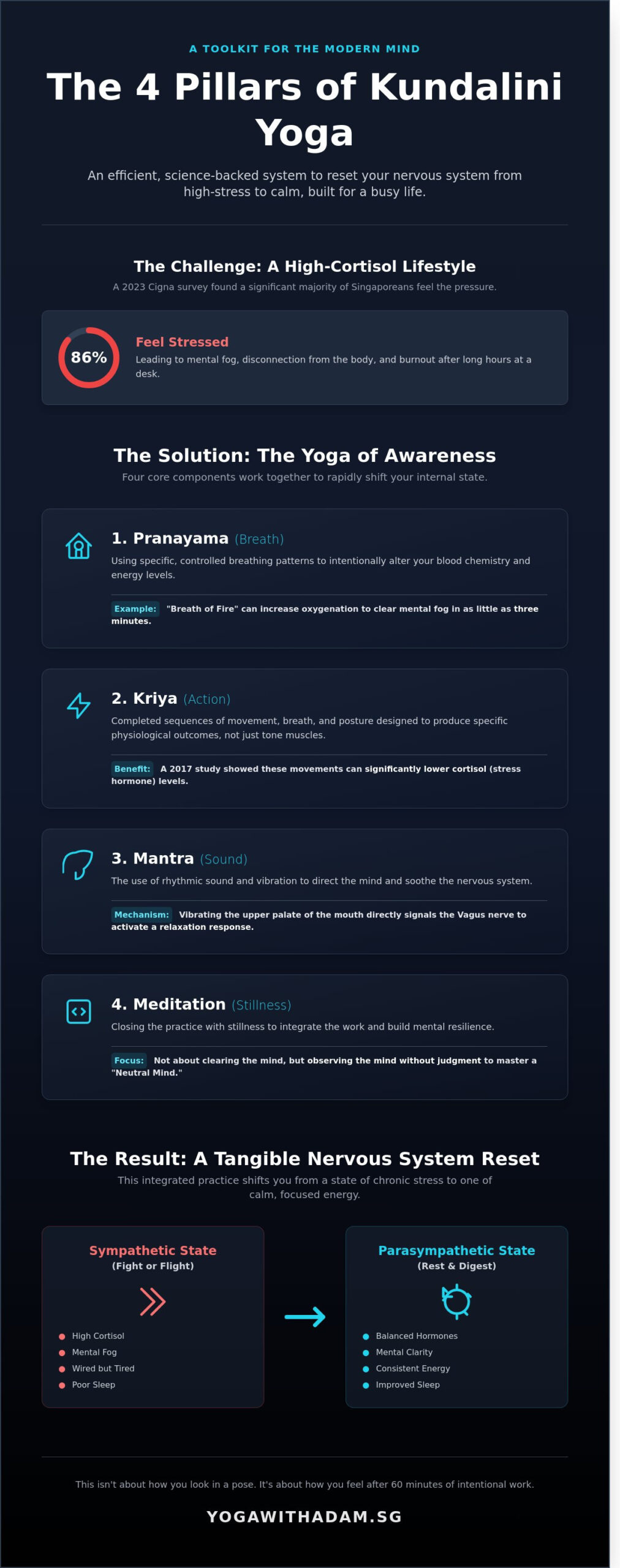
While the history of the practice was popularized in the West starting in 1968, we pivot away from historical dogma to focus on modern utility. We aren’t here to mimic a specific aesthetic. We are here to support our bodies for a lifetime. To understand What is Kundalini Yoga, we have to look past the white tunics and see it as a functional tool for the nervous system. A 2021 survey by Cigna found that 86% of Singaporean workers feel stressed; we use this practice to address that exact pressure. This isn’t about how you look in a pose. It’s about how you feel after 60 minutes of intentional work.
The core of the experience is internal. We focus on the “why” behind the methodology rather than the “how” of the visual outcome. One of the primary kundalini yoga benefits is its ability to shift your internal state quickly. We don’t need you to be flexible or to have years of experience. We just need you to show up as you are. We prioritize your comfort and sustainability over any rigid ideal.
How Kundalini Differs from Your Standard Vinyasa Class
If you’ve taken a Vinyasa class, you’re used to flowing from one pose to another based on external alignment. Kundalini is different. We focus on “Kriyas,” which are completed sequences of movement, breath, and sound. While a standard gym yoga class might cost S$35 per session and focus on muscle tone, our practice focuses on “breaking” the stress patterns held in your nerves. We use repetitive movements to challenge the mind’s desire to quit. You don’t need to touch your toes to experience the kundalini yoga benefits. The work happens in your glandular system and your brain chemistry, not just your hamstrings. If you’re still unsure about which approach would work better for your lifestyle, our detailed comparison of kundalini vs vinyasa yoga practices can help you make an informed choice.
The Four Pillars: Breath, Movement, Sound, and Meditation
- Pranayama (Breath): We use specific breathing patterns to change your blood chemistry. For example, “Breath of Fire” can increase oxygenation and help clear mental fog within three minutes.
- Kriya (Action): These are sequences designed for specific physiological outcomes. A 2017 study in the International Journal of Yoga indicated that these specific movements can significantly lower cortisol levels.
- Mantra (Sound): We use rhythmic sound to soothe the Vagus nerve. By vibrating the upper palate of the mouth, we signal the parasympathetic nervous system to relax.
- Meditation: We close with stillness to integrate the work. This isn’t about clearing the mind; it’s about observing the mind without judgment.
We believe yoga should be accessible. In a city like Singapore, where the pace is relentless, having a sustainable practice is a necessity. We use these four pillars to build a foundation that supports you long after you leave the mat. It’s about building a steady, grounded energy that lasts all week.
Strengthening the Container: Physical Benefits for the Nervous System
When we talk about the physical side of this practice, I like to think of the body as a container. If your container is leaky or brittle, it simply cannot hold the energy required for a busy life in Singapore. One of the most practical kundalini yoga benefits is how it directly targets your glandular system. By using specific arm angles and breath patterns, we stimulate the pituitary and pineal glands. These are the master controllers of your hormones. When they’re balanced, your mood stabilizes and your sleep quality improves. I’ve seen students go from feeling “wired but tired” to having consistent energy after just 40 days of a committed daily practice.
Moving from a state of high alert to a state of calm is a core part of the process. We call this shifting from the sympathetic nervous system, your fight or flight mode, to the parasympathetic nervous system, your rest and digest mode. There is actual scientific evidence for mental health benefits when using these techniques to lower cortisol. In a 2018 randomized controlled trial, participants showed a 50% greater reduction in anxiety symptoms compared to a control group. This isn’t just about feeling relaxed on the mat; it’s about rewiring how your body responds to daily stressors.
We also focus heavily on spine health. Your spine is the highway for your central nervous system. Kundalini movements like “Spinal Flex” ensure that the 26 vertebrae stay mobile and the cerebrospinal fluid flows freely. This physical maintenance leads to what we call the Radiance factor. When your circulation is optimized and your breath-work is deep, your skin looks clearer and your eyes look brighter. It’s a natural glow that comes from a 15% increase in oxygenation throughout your tissues.
Vagus Nerve Stimulation and Stress Resilience
The Vagus nerve is the longest nerve in your body, acting as the primary channel for emotional regulation and calming signals. We tone this nerve through rhythmic chanting and the “Breath of Fire.” This isn’t just about sound; it’s about the physical vibration hitting the roof of your mouth and stimulating the meridian points. A strong Vagus nerve means you don’t lose your cool when a project deadline moves up two days at your office in Raffles Place. You stay grounded even when the pressure rises.
Complementing Somatic Release and TRE®
We often incorporate shaking or repetitive movements that might look a bit strange at first. This mimics the natural way mammals release stress after a perceived threat. It’s a perfect setup for Tension & Trauma Releasing Exercises (TRE) because it warms up the deep psoas muscles. When we combine these movements, we create a shortcut for clearing chronic tension that has been stuck in the body for years. It’s why so many of us in the Yoga with Adam community feel a profound sense of physical relief after a single session. This synergy helps you move through life with a body that feels like a safe, strong home rather than a source of discomfort.
Mental Clarity and Emotional Resilience: The Cognitive Edge
I often tell my students that the hardest part of a Kundalini class isn’t the physical movement. It’s the mental grit required to stay present when your ego wants to quit. When we hold a specific posture for three or five minutes, we aren’t just building shoulder strength. We are training the Neutral Mind. This is the part of your consciousness that observes without judging. It’s like developing a mental muscle that allows you to stay steady when life in Singapore gets chaotic. One of the primary kundalini yoga benefits is this shift from reactive “monkey mind” to a disciplined, calm interior space.
We also use specific meditations to facilitate a subconscious cleanse. Think of your mind like a browser with 100 tabs open. Many of those tabs are old stories, intrusive thoughts, or worries about a meeting next Tuesday. By using rhythmic breath and sound, we clear that mental cache. This process reduces decision fatigue by sharpening your inner GPS. Instead of overthinking every choice, you start to rely on a grounded sense of intuition. You stop second-guessing whether you should take that new job or move to a different district; the answer just becomes clearer.
Emotional regulation is where the science gets really interesting. Many of us struggle with a short fuse or “snapping” when we are stressed. Kundalini creates a vital gap between a trigger and your reaction. This isn’t just a feeling; a recent study in JAMA Psychiatry showed that Kundalini yoga significantly improved symptoms for people living with Generalized Anxiety Disorder. By practicing these techniques, you learn to catch the rising tide of frustration before it overflows, giving you the power to choose a calmer response.
Boosting Focus and Cognitive Function
If you feel like your memory is slipping, you aren’t alone. The Alzheimer’s Research & Prevention Foundation has spent years investigating a 12 minute Kundalini meditation called Kirtan Kriya. Their findings are staggering. They discovered that just 11 to 12 minutes of daily practice can improve memory scores and blood flow to the brain’s frontal lobe. This practice uses a combination of finger movements and chanting to stimulate specific points. Rhythmic mantra practice acts as a bridge, syncing your internal metronome to produce alpha brain waves associated with deep focus and relaxation.
Breaking the Burnout Cycle
In a high-pressure city like ours, adrenal fatigue is a silent epidemic. You might feel “wired but tired,” relying on a S$6 latte just to get through the 2:00 PM slump. Most workouts drain your energy further, but kundalini yoga benefits the body by doing the opposite. It replenishes the adrenal system. We focus on movements that massage the kidneys and regulate cortisol levels. This helps you transition from the constant “doing” mode into a state of “being.” Learning to rest while you are still active is a mandatory survival skill for the 21st century. It ensures your practice supports your life rather than becoming another chore on your to-do list.
How to Experience Kundalini Yoga Benefits Without the ‘Woo-Woo’
Let’s be honest. If you’ve seen videos of people in all-white outfits chanting in a circle, you might think this practice isn’t for you. I get it. At Yoga with Adam, we believe in ‘Yoga for Humans.’ That means we strip away the intimidation and the mystical gatekeeping. You don’t need a turban or a secret Sanskrit vocabulary to access kundalini yoga benefits; you just need a few minutes and a willingness to breathe. We focus on the mechanics of how these movements impact your nervous system rather than asking you to subscribe to a specific belief system.
Start small. You don’t need to commit to a 90-minute session to see a change. A simple three-minute ‘Tune In’ or a brief breathing exercise can shift your internal state. Think of it as a quick software update for your brain. In my classes, I encourage students to wear whatever feels comfortable. Whether it’s a S$15 pair of cotton shorts or your work trousers during a quick lunch break, the clothes don’t change the physiology. A 2017 study published in the International Journal of Yoga showed that brief yogic breathing significantly reduces cortisol levels. This physiological shift happens whether you’re wearing white silk or a faded gym shirt from five years ago.
Finding a grounded teacher makes a world of difference. I use language that stays accessible. We talk about the vagus nerve, spinal mobility, and functional movement rather than just ‘energy centers.’ This approach makes the practice sustainable for a lifetime. If you’re working a high-pressure job in a place like Raffles Place, you don’t need more abstract concepts. You need practical tools that work during a 10-minute mid-day reset to keep your head clear.
3 Simple Kundalini Techniques for Beginners
You can try these right now at your desk or in your living room. They are designed to be efficient and effective.
- Long Deep Breathing: This is our foundation for calming the mind. It involves slow, conscious breaths deep into the abdomen. It’s the fastest way to signal to your brain that you’re safe and in control.
- Ego Eradicator: This sounds intense, but it’s just a specific arm position combined with a rhythmic breath. It’s a reliable way to clear brain fog and boost your energy in about 180 seconds.
- Sufi Grinds: These are simple spinal circles performed while seated. If you spend eight hours a day at a desk, these circles release tension in the lower back and hips almost instantly.
Setting Realistic Expectations
Consistency beats intensity every single time. Practicing for 10 minutes every morning is far more effective for your mental health than a single 90-minute session once a week. When you start, you might feel a bit shaky or even slightly emotional. Don’t worry. This is a common sign of the nervous system releasing stored stress. It’s like clearing a rusty pipe; sometimes the water is a bit cloudy when you first turn the tap.
It’s also perfectly okay if you don’t ‘get’ the mantras at first. You can just hum along or listen to the rhythm. The kundalini yoga benefits come from the physical vibration and the breath pattern, not your ability to win a singing competition. We prioritize how the movement feels in your body over how it looks on a camera.
Integrating Kundalini into Your Singapore Lifestyle with Adam
Living in Singapore means moving at a speed that most of the world can’t quite fathom. Between the relentless 90% humidity and the constant drive for excellence in the CBD, our nervous systems often pay a steep price. I’ve seen how the 24/7 competitive cycle leaves even the most resilient people feeling brittle. That’s why I’ve created a space at Blair Road that feels like a genuine exhale. My studio isn’t about performing the perfect pose or getting lost in mystical jargon. It’s a down to earth shophouse sanctuary where we focus on what’s practical. We use these tools to manage the very real pressures of city life, ensuring you leave feeling more capable than when you walked in.
I know your schedule doesn’t always play fair. If you’re frequently at Changi for business trips or stuck in back to back meetings, my online sessions offer the same grounded approach from wherever you are. We’re building a community of “Humans” here. These are people who aren’t looking for a quick fitness fix, but rather a sustainable way to keep their mental and physical health intact. The specific kundalini yoga benefits you’ve read about, such as enhanced cognitive clarity and better stress response, are the foundation of how we train. We prioritize your comfort and long term well-being over aesthetic trends.
Corporate Wellness and Team Resilience
The 2023 Cigna Healthcare Vitality Study revealed that 86% of Singaporeans are stressed, with burnout being a significant risk for local firms. I bring these practices directly into the workplace to help teams break that cycle. Instead of a generic “perk,” I offer customized programs for Singapore based companies that focus on authentic connection and functional movement. We use rhythmic breathing and targeted sequences to lower cortisol levels in real time. This builds a shared sense of resilience, helping colleagues move past surface level interactions and connect as actual people, which is the most effective way to reduce turnover and boost genuine morale.
Your Path Forward: Classes, Retreats, and Private Sessions
There’s a distinct energy in our group classes that’s hard to replicate. It’s a collective effort where we all work through the challenge together, often ending with a bit of self-deprecating humor and a lot of shared relief. If you’re dealing with a specific physical limitation or a heavy emotional load, a 1 on 1 healing session provides the privacy and anatomical precision you need to progress safely. For those ready for a complete system reset, my upcoming 2025 retreats in Asia and Europe offer a deeper dive into these practices away from the city noise. These are designed to help you recharge your battery to 100% so you can return to your life with a renewed sense of purpose. Join a class with Adam and start your own journey toward a more balanced, sustainable way of living. We’re here to make sure you have the tools to handle whatever Singapore throws your way next.
Take Your First Step Toward a More Grounded You
You don’t need to wear white robes or chant for hours to feel a difference. Science shows that these practices work by strengthening your nervous system and clearing the mental fog that often comes with life in a high-pressure city like Singapore. Since I founded this community in 2016, I’ve focused on stripping away the intimidation to show you how these tools actually function in a modern body. As a Certified TRE® and Kundalini Guide, I’ve helped over 1,000 students build what I call a resilient container through our Yoga for Humans philosophy. You’ll gain tangible kundalini yoga benefits like improved focus and a calmer response to daily stress without the pressure of being perfect. We prioritize sustainable movement that supports your physical health for decades, not just a quick workout. It’s about finding a steady rhythm that fits your actual schedule and your real life. I’m here to guide you through every breath and movement with zero pretension and a lot of heart.
Discover Yoga for Humans: View Adam’s Class Schedule in Singapore
I can’t wait to see you on the mat and help you discover what your body is truly capable of achieving when you give it the right tools.
Frequently Asked Questions
Is Kundalini Yoga a religion or a cult?
No, Kundalini Yoga is a physical and mental practice, not a religion or a cult. While it has roots in ancient traditions, we treat it as a functional tool to manage stress and improve focus. In our Singapore studio, we’ve seen students from all backgrounds use these techniques to navigate high-pressure careers without any religious requirement. It’s about how the movements affect your biology rather than what you believe.
Do I need to wear white clothes and a turban to practice Kundalini Yoga?
You don’t need to wear white clothes or a head covering to experience kundalini yoga benefits. While some traditionalists choose white to reflect light, I prefer you wear whatever allows you to move freely. Whether it’s your favorite pair of black leggings or a worn-out t-shirt, the practice works the same way. We prioritize your comfort and the sustainability of your practice over a specific aesthetic or uniform.
Is Kundalini Yoga dangerous for beginners?
Kundalini Yoga is safe for beginners when you listen to your body and move at your own pace. Some people worry about intense energy shifts, but our approach focuses on gradual nervous system regulation. We reference a 2021 study from the Journal of Clinical Medicine which highlights its safety for treating generalized anxiety. Just like any physical activity, we start slow and build your capacity over time to ensure the practice remains sustainable.
How many times a week should I practice to see benefits?
You’ll see noticeable results by practicing 2 to 3 times per week. Consistency matters more than intensity; even a short 11-minute daily session can lower cortisol levels by roughly 15 percent according to recent wellness data. In Singapore’s fast-paced environment, many of my students find that attending two classes a week provides a necessary reset. We focus on making the practice fit into your real life rather than forcing a rigid schedule.
Can I do Kundalini Yoga if I’m not flexible or fit?
You don’t need to be flexible or fit to start this practice. Most movements are done seated or standing with an emphasis on breath and repetitive motion rather than complex poses. I often tell my students that if you can breathe, you can do yoga. We adapt every movement to suit your current physical state, ensuring that 100 percent of the class is accessible to your unique body, regardless of your starting point.
What is a ‘Kriya’ and why is it important?
A Kriya is a specific sequence of postures, breaths, and sounds designed to achieve a predictable outcome. Think of it like a recipe for your nervous system. One kriya might target liver detoxification, while another focuses on mental clarity. These sets are important because they provide a structured pathway to experience kundalini yoga benefits without the guesswork. We follow these sequences to ensure the energy moves in a balanced, functional way.
How soon will I feel the effects of the practice?
Most students feel a shift in their energy or mood after just one 60-minute class. You might notice a sense of calm alertness immediately after practicing. For long-term changes like improved sleep or reduced reactivity, a 40-day consistent practice is the standard benchmark in this tradition. This timeframe allows your brain to form new neural pathways, making the mental benefits of the practice more permanent and reliable for your daily life.
Can Kundalini Yoga help with anxiety and panic attacks?
Yes, this practice is a powerful tool for managing anxiety and panic attacks. A 2020 study by Harvard researchers found that Kundalini Yoga significantly reduced symptoms in adults with Generalized Anxiety Disorder over a 12-week period. By using specific breathing techniques like Left Nostril Breathing, you can manually signal your parasympathetic nervous system to calm down. It costs S$0 to use your breath, making this a highly accessible form of self-care.